



Can I Eat Before Oral Sedation Dentistry? 5 Vital Rules
Your Guide to Eating Before Oral Sedation Dentistry
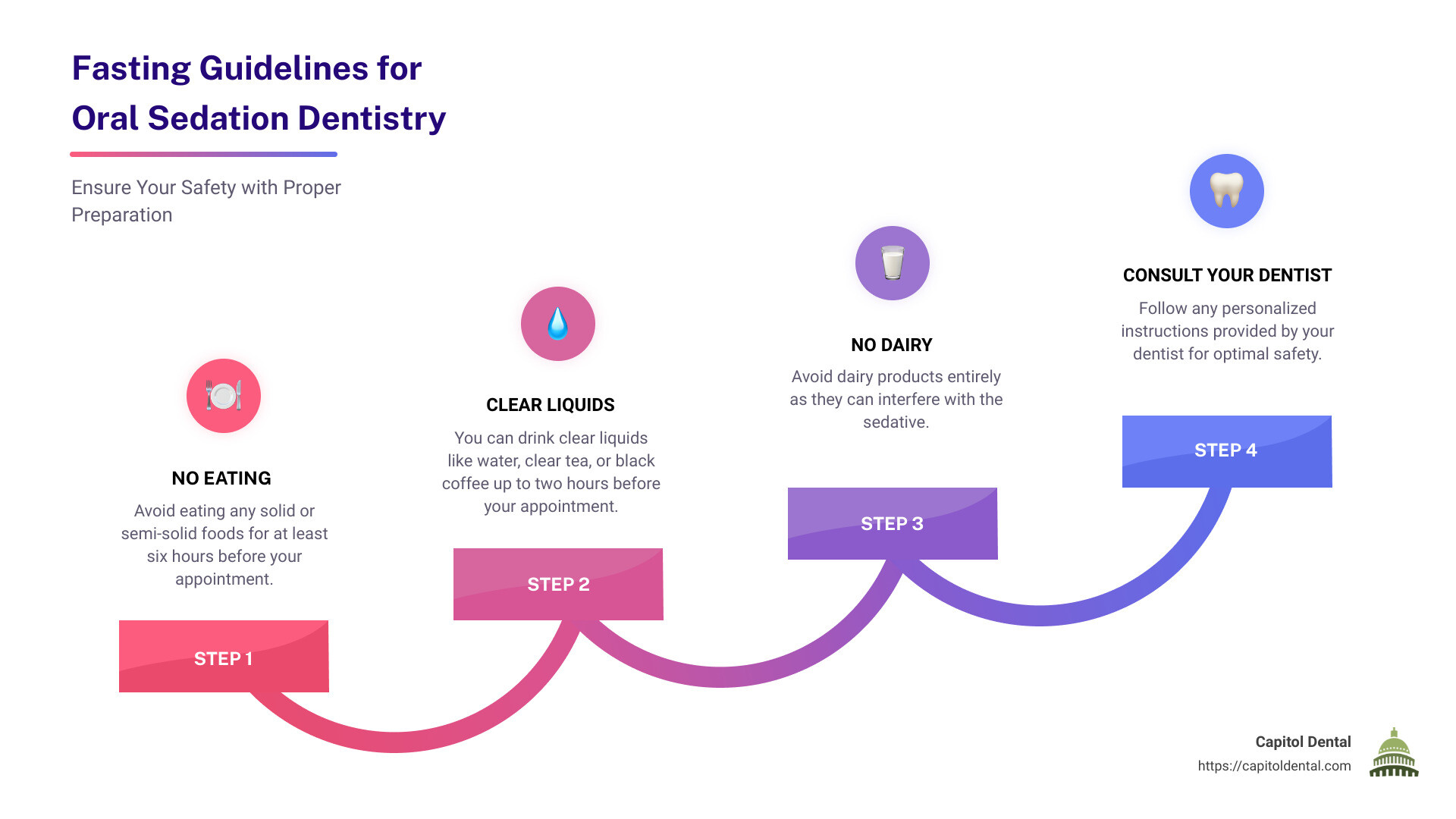
When preparing for a dental procedure that involves oral sedation, a common question patients often ask is, “Can I eat before oral sedation dentistry?” The short answer is generally no, but there are specifics you need to know:
- Avoid eating and drinking for at least six hours before your appointment.
- You may drink clear liquids like water, clear tea, or black coffee up to two hours beforehand, but only if your dentist permits.
Preparation is vital to ensure your safety and comfort during your dental procedure. Not following the guidelines can increase the risk of complications, such as aspiration.
Hello, I’m Dr. Ryan Doyle, DDS. With years of experience in patient care and dental sedation, I’ll guide you through the right steps to prepare for your appointment at Capitol Dental. My goal is to ensure you have a stress-free and safe experience.
Understanding Oral Sedation Dentistry
Oral sedation dentistry, also called conscious sedation, uses sedative drugs to help you feel calm and relaxed during dental procedures. Unlike general anesthesia, you stay awake and can respond to instructions, but you won’t feel anxious or uncomfortable.
How Does It Work?
Oral sedation involves taking a pill, usually an hour before your appointment. The most common drugs used are benzodiazepines, like Valium or Halcion. These medications help to ease anxiety and make you feel drowsy, but you’ll still be conscious.
Benefits of Oral Sedation
- Reduced Anxiety: Many people fear dental visits. Oral sedation helps you feel relaxed, making the experience more pleasant.
- Comfort: You won’t feel pain or discomfort during the procedure. This is especially helpful for longer or more complex treatments.
- Memory: Most patients have little to no memory of the procedure, which can reduce anxiety for future visits.
Patient Comfort
Your comfort is our top priority. With oral sedation, you can expect a calm and stress-free experience. Imagine lying back in the dental chair, feeling relaxed and at ease, while we take care of your dental needs.

Dr. Frank Yeh from Coastal Virginia Oral and Maxillofacial Surgery says, “Even though you’ll be sedated, you’ll still be awake and able to respond to instructions during the procedure.”
Safety First
It’s crucial to follow your dentist’s instructions closely. This includes fasting guidelines and any specific advice about medications. Not adhering to these guidelines can increase the risk of complications, such as aspiration.
Dr. Ryan Doyle, DDS emphasizes, “Preparation is vital to ensure your safety and comfort during your dental procedure. Not following the guidelines can increase the risk of complications.”
By understanding how oral sedation works and its benefits, you can feel more at ease about your upcoming dental appointment. Next, let’s look at what you should eat (and not eat) before your oral sedation dentistry appointment.
Can I Eat Before Oral Sedation Dentistry?
Why Fasting is Important
When preparing for oral sedation dentistry, one of the most crucial steps is fasting. This means avoiding any food or drinks for a specified period before your appointment. But why is fasting so important?
Aspiration Risk: Eating or drinking before your procedure can increase the risk of aspiration. Aspiration happens when food or liquid accidentally enters your lungs, which can lead to serious complications. When you’re sedated, your body’s reflexes are dulled, making it easier for this to happen.
Medication Absorption: Fasting helps ensure that the sedative medication is absorbed predictably into your bloodstream. A full stomach can slow down the absorption process, making it harder for the sedative to work effectively. Dr. Leah Stroing explains, “Fasting before your appointment helps eliminate variables and ensures proper sedation.”
Nausea Reduction: One common side effect of oral sedation is nausea. If your stomach is full, you’re more likely to feel queasy or even vomit during or after the procedure. Vomiting can be particularly problematic if you’ve had oral surgery, as it could disrupt any sutures in your mouth.
Clear Liquids and Exceptions
While fasting generally means no food or drinks, there are some exceptions for clear liquids. These can sometimes be consumed up to two hours before your appointment.
Water: Staying hydrated is important, and water is usually allowed up to two hours before your procedure. However, always confirm this with your dentist.
Clear Tea and Black Coffee: In some cases, clear tea or black coffee without milk or sugar may be permitted. These beverages do not leave residues in your stomach that could interfere with the sedation process.
Specific Instructions from Your Dentist: Always follow the specific guidelines provided by your oral surgeon. These instructions are tailored to your individual needs and the details of your procedure. Dr. Frank Yeh advises, “Clear communication with your oral surgeon about your dietary restrictions is crucial for your safety.”
By adhering to these fasting guidelines, you can help ensure a smooth and safe dental procedure. Next, let’s discuss what to avoid before your oral sedation dentistry appointment.
What to Avoid Before Your Appointment
When preparing for your oral sedation dentistry appointment, know what to avoid to ensure everything goes smoothly.
Solid Foods, Semi-Solid Foods, and Dairy Products
Solid Foods: Avoid eating any solid foods for at least six hours before your appointment. This includes meals like sandwiches, salads, or snacks like chips and nuts. Eating solid foods too close to your procedure can increase the risk of aspiration, where food particles might enter your lungs.
Semi-Solid Foods: Foods like yogurt, pudding, and oatmeal fall into this category. These should also be avoided, as they can still cause issues during sedation. Even though they are not completely solid, they can still be difficult for your body to manage under sedation.
Dairy Products: Dairy can be particularly problematic as it can upset your stomach and increase the chance of regurgitation. Avoid milk, cheese, and any dairy-based foods leading up to your appointment.
Alcohol and Medication Restrictions
Alcohol Consumption: Refrain from drinking alcohol for at least 24 hours before your procedure. Alcohol can interfere with the sedative medications and increase the risk of complications. It can also dehydrate you, making the sedation process less effective.
Prescription Medications: If you’re on any prescription medications, discuss them with your oral surgeon. Some medications can interact with the sedatives used during your procedure. Dr. Frank Yeh advises, “Always inform your oral surgeon about any medications you are taking to avoid potential interactions.”
Surgeon Instructions: Follow any specific instructions given by your oral surgeon regarding medications. You may need to take certain medications with a small sip of water, even during your fasting period. Always follow the personalized advice provided to you.
By avoiding these foods and substances, you help ensure that your oral sedation dentistry procedure goes as smoothly as possible. Next, let’s talk about how to prepare for your appointment.
Preparing for Your Appointment
Specific Instructions from Your Dentist
Transportation Arrangements
After oral sedation, you’ll feel groggy and disoriented. It’s crucial to have a friend or family member drive you to and from your appointment. You won’t be able to drive yourself safely.
Day Off Work
Plan to take the entire day off work. The effects of the sedative can last between two and eight hours, so you’ll need time to rest and recover.
Communication with Your Dentist
Talk openly with your dentist about any concerns or questions you have. Tell them about any medications you’re taking, dietary restrictions, or allergies. This helps the dentist tailor their advice specifically to you.
Personalized Advice
Your dentist will give you specific instructions based on your individual needs. These might include when to stop eating and drinking, and any special considerations for your health conditions, like diabetes.
Dietary Restrictions
Generally, you should avoid eating or drinking anything for six hours before your appointment. Clear liquids like water or black coffee may be allowed up to two hours before, but follow your dentist’s specific guidelines.
Medication Guidelines
Discuss your medications with your dentist. They will tell you which ones you need to take and which ones to skip on the day of your procedure. Some medications might need to be taken with a small sip of water, even during your fasting period.
By following these specific instructions from your dentist, you can ensure a smoother and safer experience during your oral sedation dentistry appointment.
Post-Procedure Care and Nutrition
Returning to Normal Diet
After your oral sedation dentistry appointment, it’s crucial to take care of your mouth and ease back into your regular diet gradually. The sedation can leave your mouth feeling numb or tingly for a few hours, which means you need to be cautious about what you eat and drink.
Soft Foods First
Start with soft foods to avoid any discomfort or accidental injuries. Some good options include:
- Mashed potatoes
- Yogurt
- Applesauce
- Scrambled eggs
These foods are easy to eat and gentle on your mouth, making them ideal right after your procedure.
Avoid Hot Beverages
Hot drinks like coffee or tea can cause burns since you might not fully feel the temperature due to the numbness. Stick to room-temperature or cold beverages until the numbness completely wears off.
Gradual Reintroduction
Once the numbness is gone, you can slowly reintroduce more solid foods into your diet. Begin with semi-soft foods like pasta or rice before moving on to harder foods. Take small bites and chew slowly to avoid any discomfort.
Avoiding Burns or Bites
Be extra careful not to burn or bite yourself. The lingering effects of sedation can dull your reflexes, making it easier to accidentally hurt your mouth. Avoid hard, crunchy, or very hot foods until you’re sure all sensation has returned to normal.
By following these guidelines, you’ll help ensure a smooth transition back to your regular eating habits while keeping your mouth safe and comfortable.
Frequently Asked Questions about Eating Before Oral Sedation Dentistry
What happens if you eat before dental sedation?
Eating before oral sedation dentistry can lead to some serious complications. When you are sedated, your body’s reflexes are dulled. This increases the risk of aspiration, where food or liquid accidentally enters your lungs. Aspiration can cause severe respiratory issues and complicate the procedure.
Additionally, having food in your stomach can make you feel nauseous during the treatment. This is because sedatives might trigger your gag reflex, making it harder for you to stay comfortable. To avoid these issues, it’s best to follow your dentist’s instructions and refrain from eating for at least six hours before your appointment.
Can you drink water before dental sedation?
Yes, but with limitations. Generally, you can drink clear liquids like water, clear tea, or black coffee up to two hours before your dental sedation. This helps keep you hydrated without increasing the risk of aspiration. However, avoid beverages like milk, juice with pulp, or anything that isn’t clear, as these can still pose a risk.
Always follow the specific guidelines given by your dentist. They might adjust the timing based on your procedure and individual health needs.
Do you need to fast for oral sedation?
Yes, fasting is crucial for oral sedation dentistry. The general rule is to avoid eating or drinking anything for at least six hours before your procedure. This helps reduce the risk of aspiration and nausea, ensuring a safer and more comfortable experience.
If you have specific health conditions like diabetes, discuss them with your dentist. They can provide personalized instructions to help you manage your fasting period safely.
By adhering to these guidelines, you can help ensure that your oral sedation dentistry procedure goes smoothly and safely.
Conclusion
At Capitol Dental, your safety and comfort are our top priorities. We understand that dental procedures can be stressful, and we are committed to providing comprehensive care that addresses all your needs.
Patient safety is at the forefront of everything we do. That’s why we adhere to strict guidelines for oral sedation dentistry, including fasting protocols and clear communication about dietary restrictions. By following these guidelines, we help ensure a smooth and safe experience for every patient.
Our approach to comprehensive dental care means we offer a wide range of services, from routine check-ups to advanced procedures, all under one roof. Whether you need a simple cleaning or a more complex treatment, our team is here to support you every step of the way.
For more information on how we can make your dental visit as comfortable and stress-free as possible, visit our Boise Sedation Dentistry page.
We look forward to helping you achieve a healthier, more confident smile.