



Comparison of Dental Xray Film and Digital: Top 5 Insights
Introduction
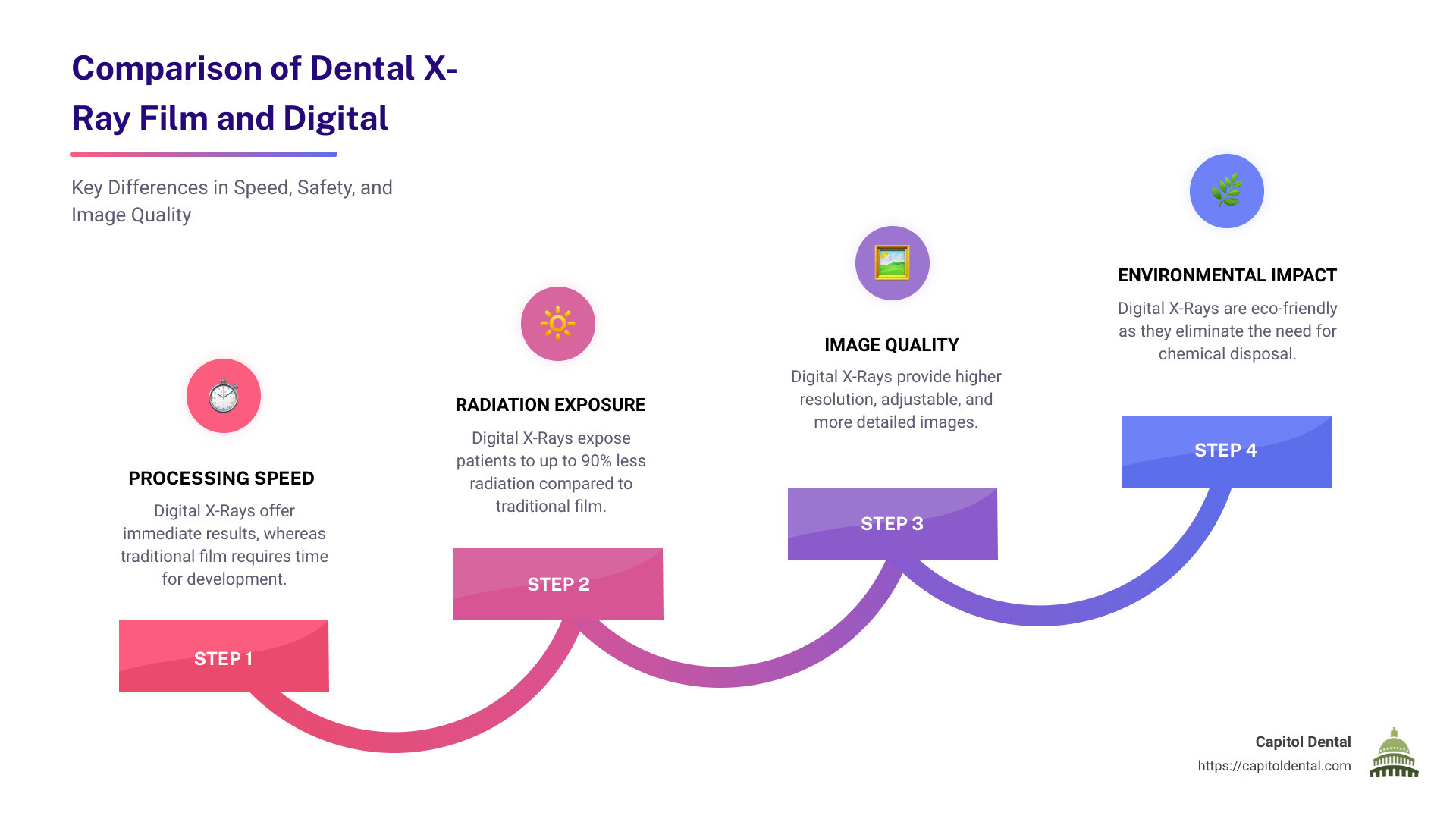
When it comes to understanding the comparison of dental x-ray film and digital, the key differences come down to speed, safety, and image quality. Here’s a quick summary:
Digital X-Rays:
– Faster Processing: Immediate results.
– Lower Radiation: Up to 90% less.
– Higher Resolution: Adjustable and more detailed images.
– Eco-Friendly: No chemical waste.
– Comfortable: Non-intrusive sensors.
Traditional Film X-Rays:
– Slower Processing: Requires development.
– Higher Radiation: Greater exposure.
– Fixed Quality: Limited enhancement.
– Environmental Impact: Chemical disposal needed.
– Less Comfortable: Uses bulky film.
As dental technology advances, dental digital x-ray machines have revolutionized how we capture and view images of your teeth. At Capitol Dental, we utilize state-of-the-art digital radiography to ensure you receive the best possible care.
Hello, I’m Dr. Ryan Doyle, DDS. With years of experience in the dental field, I’ve seen the advantages of digital x-rays over traditional film. This expertise allows me to provide clear insights into the comparison of dental x-ray film and digital, ensuring the best care for our patients.
Speed Comparison: Digital vs. Film
When it comes to dental X-rays, speed is crucial for both patients and dental professionals. The comparison of dental x-ray film and digital reveals significant differences in processing time and workflow efficiency.
Rapid Processing
Digital X-rays are incredibly fast. Once the X-ray is taken, the image is almost immediately available for review on a computer screen. This quick turnaround is a game-changer for both dentists and patients. No more waiting around for images to develop; the dentist can make a diagnosis and start treatment right away.
Film X-rays, on the other hand, require manual development. This involves taking the X-ray film to a darkroom and using chemicals to process the image. This process can take several minutes, adding unnecessary waiting time to dental appointments.
Manual Development vs. Immediate Review
With digital X-rays, the need for a darkroom and chemical processing is eliminated. The images are captured electronically and can be instantly reviewed. This immediacy allows for quicker assessments. If a retake is necessary, it can be done on the spot without the extended wait associated with film development.
In contrast, film X-rays involve a more cumbersome process. The film must be developed, dried, and then reviewed. If the initial image is unsatisfactory, the entire process has to be repeated, leading to longer appointment times and potential delays in diagnosis.
Workflow Efficiency
The efficiency of digital X-rays extends beyond just speed. The images can be easily stored, shared, and enhanced using specialized software. This streamlines the entire workflow, from image capture to diagnosis and treatment planning.
For example, at Capitol Dental, our digital X-ray system integrates seamlessly with our patient management software, allowing for quick access to images during consultations. This not only saves time but also improves the quality of care we can provide.
In contrast, film X-rays require physical storage space and are more challenging to share with other healthcare providers. The manual handling of film can also introduce errors and inefficiencies into the workflow.
By adopting digital radiography, we ensure that our patients benefit from faster, more accurate diagnoses and more efficient treatment planning.
Next, we’ll delve into the safety benefits of digital X-rays compared to traditional film X-rays.
Radiation Exposure: Safety Concerns Addressed
One of the most significant advantages of digital dental X-rays over traditional film X-rays is the reduced radiation exposure. Digital X-ray systems are designed to be more sensitive to X-ray energy. This means they can produce high-quality images while using up to 80% less radiation than film X-rays.
Patient Safety
Lower radiation levels are crucial for patient safety. This is especially important for individuals who require frequent imaging, such as those undergoing orthodontic treatment or monitoring for dental issues. The reduced exposure minimizes the risk of radiation-related health complications, making digital X-rays a safer option for both adults and children.
Quote: “Digital imaging may reduce radiation exposure for both the patient and the dentist by up to 90%,” highlights a study on the benefits of digital radiography. This reduction in radiation helps prevent health issues such as radiation sickness, skin burns, and an increased risk of cancer.
Environmental Impact
Traditional film X-rays require chemical processing, which involves the use of hazardous materials like lead and silver. These chemicals can contaminate water sources and soil, posing a significant environmental risk. Digital X-rays, on the other hand, are chemical-free. This eliminates the need for harmful chemicals, reducing the environmental footprint of dental practices.
In addition to being chemical-free, digital X-rays are more energy-efficient. They require less energy to operate compared to the equipment needed for film X-rays and developing processes. This energy efficiency contributes to a more sustainable practice, aligning with global efforts to protect our planet for future generations.
Chemical-Free Processing
The absence of chemical processing in digital X-rays not only benefits the environment but also enhances the safety and convenience of dental procedures. Without the need for darkrooms and chemical baths, the risk of chemical exposure to both patients and dental staff is eliminated. This makes the entire process cleaner and more efficient.
By embracing digital radiography, dental practices like Capitol Dental not only improve patient safety but also contribute to a more sustainable and environmentally-friendly practice. This shift towards digital technology represents a significant leap forward in both healthcare and environmental stewardship.
Next, we’ll explore how digital X-rays enhance image quality, offering clearer and more detailed visuals compared to traditional film X-rays.
Image Quality: Clarity and Detail
When it comes to image quality, digital X-rays have a clear advantage over traditional film X-rays. Let’s break down why.
Higher Resolution
Digital X-rays provide high-resolution images, which means they capture more detail. This makes it easier for dentists to see small issues that might be missed on film X-rays. According to a study, digital images have exceptional clarity and detail, crucial for accurate diagnoses and effective treatment planning.
Image Manipulation
One of the biggest perks of digital X-rays is the ability to manipulate the images. Dentists can adjust brightness, contrast, and even zoom in on specific areas without losing image quality. This is impossible with traditional film X-rays, where the image quality is fixed. Digital X-rays also allow for real-time adjustments, making it easier to get the perfect shot on the first try.
Better Visualization
Digital X-rays offer better visualization of bone structures, soft tissues, and cavities. This enhanced resolution allows for a more comprehensive view of the area of interest. For instance, dentists can magnify images to examine specific areas more closely, aiding in the detection of cavities, bone loss, and infections. This level of detail is hard to achieve with film X-rays.
Enhanced Diagnosis
The superior image quality of digital X-rays leads to enhanced diagnosis. Clearer images reduce the need for retakes, minimizing patient exposure to radiation. According to research, the immediacy of digital images allows for quicker assessments, leading to faster clinical decision-making and a more streamlined patient experience. This means better patient outcomes and more efficient dental care.
In summary, the comparison of dental xray film and digital shows that digital X-rays offer higher resolution, better image manipulation, improved visualization, and enhanced diagnosis capabilities. These benefits make digital X-rays a superior choice for both patients and dental professionals.
Next, we’ll delve into the environmental impact of switching to digital X-rays and how this technology supports a more sustainable practice.
Environmental Impact: Going Digital
Switching to digital X-rays isn’t just better for patient care; it’s also a win for the environment. Here’s why:
Chemical Disposal
Traditional film X-rays require chemical processing, which involves using and disposing of hazardous materials like lead and silver. These chemicals can contaminate water sources and soil if not handled correctly. Digital X-rays eliminate this need entirely, making them a much greener option.
Energy Efficiency
Digital X-rays use less energy compared to film-based systems. Traditional X-ray machines need significant power for both the imaging process and the development of the film. Digital systems, on the other hand, capture and display images almost instantly, consuming less energy and reducing the overall carbon footprint of a dental practice.
Reduced Waste
With digital X-rays, there’s no need for physical film, which means less plastic and paper waste. Traditional X-rays generate a lot of waste from film sheets, development chemicals, and storage materials. Digital images are stored electronically, reducing the need for physical storage space and cutting down on waste products.
Sustainable Practice
Adopting digital X-rays aligns dental practices with global sustainability goals. By reducing chemical use, cutting energy consumption, and minimizing waste, digital radiography supports a more eco-friendly approach to dentistry. This shift not only helps protect the environment but also enhances the practice’s reputation as a forward-thinking and responsible healthcare provider.
Next, we’ll explore the ease of storage and sharing with digital X-rays and how this technology improves data security and patient confidentiality.
Ease of Storage and Sharing
One of the standout advantages of digital dental X-rays is the ease of storage and sharing. Unlike traditional film X-rays, which require physical space for storage and can degrade over time, digital X-rays are stored electronically. This digital storage not only saves space but also ensures that images remain intact and accessible for years.
Digital Storage
With digital X-rays, images are stored on computers or cloud-based systems. This eliminates the need for bulky filing cabinets and reduces the risk of losing important patient records. Digital storage also makes it easier to organize and retrieve patient images quickly, enhancing overall efficiency in the dental office.
Cloud-Based Systems
Cloud-based systems offer an additional layer of convenience and security. By storing X-rays in the cloud, dental practices can access patient images from anywhere, anytime. This flexibility is particularly useful for consultations and second opinions, as images can be shared seamlessly with other healthcare providers.
Secure Transfer
Digital X-rays can be securely transferred between dental professionals, ensuring that patient information remains confidential. Encryption and secure transfer protocols safeguard patient data, making it compliant with healthcare regulations. This secure sharing capability facilitates quicker consultations and more efficient treatment planning.
Patient Confidentiality
Maintaining patient confidentiality is a top priority in healthcare. Digital X-rays help achieve this by allowing encrypted storage and transfer of images. Unlike physical films, which can be misplaced or damaged, digital images are protected by multiple layers of security. This ensures that patient information stays private and secure.
Next, we’ll examine the pros and cons of film imaging in dental practices, exploring its impact on workflow, image security, and environmental concerns.
Pros and Cons of Film Imaging
Existing Workflow
Many dental practices have used film X-rays for years. This familiarity can make the workflow smooth and predictable. Dentists and technicians know the process well, from taking the X-ray to developing the film. However, this comfort comes with some drawbacks.
Image Security
Film X-rays are physical items. This means they can be lost, stolen, or damaged. If a film goes missing, it can be a big problem for patient records. In contrast, digital images can be securely stored and backed up, reducing the risk of loss.
Processing Time
Developing film takes time. You have to wait for the images to be processed in a darkroom using chemicals. This can delay diagnosis and treatment. Digital X-rays, on the other hand, are almost instant, speeding up patient care.
Hazardous Chemicals
Film X-rays require chemicals for development. These chemicals can be harmful to the environment. They need to be handled and disposed of carefully. Digital X-rays eliminate this issue, making them a greener option.
Storage Space
Storing film X-rays takes up a lot of space. You need cabinets and rooms to keep all the films organized. This space could be used for more productive activities. Digital images are stored on computers or cloud systems, saving physical space.
Now that we’ve looked at the pros and cons of film imaging, let’s move on to the benefits and drawbacks of digital imaging in dental practices.
Pros and Cons of Digital Imaging
High-Quality Images
One of the biggest advantages of digital dental imaging is the high-quality images it produces. These images are often clearer and more detailed than traditional film X-rays. Digital X-rays provide high resolution and allow dentists to zoom in on specific areas, making it easier to detect issues like cavities, bone loss, and infections.
“Digital radiography can produce X-ray images within seconds, and the process requires none of the chemicals necessary to develop film X-rays.”
Image Enhancement Tools
Digital imaging also comes with image enhancement tools. Dentists can adjust the brightness, contrast, and even apply filters to get a better view of the dental structures. These tools make it easier to diagnose problems quickly and accurately.
- Zoom In: Focus on specific areas for detailed examination.
- Adjust Brightness and Contrast: Improve visibility of dental issues.
- Apply Filters: Enhance images for better diagnosis.
These capabilities can lead to higher treatment acceptance rates as patients can better see and understand their dental conditions.
Storage Security
With digital imaging, storing and securing data becomes much easier. Digital images can be stored on computers or cloud-based systems, ensuring they remain intact and easily accessible for years. This also eliminates the need for physical storage space, freeing up valuable real estate in the dental office.
- Secure Storage: Digital files are less likely to be lost or damaged.
- Easy Access: Quick retrieval for future consultations or second opinions.
- Compliance: Encryption and secure transfer methods help maintain patient confidentiality.
Purchase Costs
One of the main drawbacks of digital imaging is the purchase cost. Digital dental X-ray machines can be very expensive, especially when bought new. This might discourage some dental professionals from making the switch, despite the long-term benefits.
“Digital extraoral X-ray machines can be very expensive, especially when purchased new. They are often the highest priced equipment item in any dental practice.”
Learning Curve
Switching from film to digital radiography involves a completely different workflow. Dental staff need to become familiar with the operation of the new machine, as well as the associated software. This can be overwhelming at first, but most practices find that the digital process is easier once they get used to it.
- Training Required: Staff needs to learn how to use new equipment and software.
- Initial Adjustment: Adapting to a new workflow can take time.
- Support Available: Many suppliers offer training and support to ease the transition.
“If you purchase your equipment from a trusted certified reseller, they should provide training with the used dental equipment to help ease the transition.” source
With these insights into the pros and cons of digital imaging, we can better understand why many dental practices are making the switch. Now, let’s address some frequently asked questions about digital vs. film dental X-rays.
Frequently Asked Questions about Digital vs. Film Dental X-Rays
What is the difference between film-based and digital radiography?
Film-based radiography uses traditional X-ray film to capture images. The film must be developed using chemicals in a darkroom, which takes time and involves handling hazardous materials. The image quality is fixed and cannot be adjusted after development.
Digital radiography, on the other hand, uses electronic sensors to capture images. These images are available almost immediately and can be enhanced for better clarity. Digital X-rays use up to 90% less radiation than traditional film X-rays, making them safer for patients. Additionally, digital images can be stored electronically and easily shared with other healthcare providers.
What are the advantages of intraoral digital imaging compared to film-based radiography?
Intraoral digital imaging offers several advantages over film-based radiography:
- Real-time Imaging: Digital X-rays provide immediate results, allowing for quicker diagnosis and treatment.
- Low X-ray Dose: Digital systems require less radiation to produce clear images, reducing patient exposure.
- No Chemical Processing: Eliminates the need for chemical development, which is better for the environment and speeds up the workflow.
- High Resolution: Digital images can be enhanced for better visualization, making it easier to detect issues like cavities and bone loss.
How is digital radiography different from conventional radiography in dentistry?
Digital radiography uses electronic sensors instead of traditional film to capture X-ray images. These sensors are more sensitive to X-ray energy, resulting in clearer images with less radiation. Once captured, the images are transmitted directly to a computer display for immediate review.
Conventional radiography requires film to be exposed to X-rays, then developed using chemicals. This process is slower and involves more steps. The images are static and cannot be enhanced once developed.
In summary, digital radiography offers faster, safer, and more detailed imaging compared to traditional film-based methods. This makes it a superior choice for both patients and dental professionals.
Next, we’ll explore the environmental impact of switching to digital X-rays and why it’s a more sustainable option.
Conclusion
At Capitol Dental, we are committed to providing personalized care using the most advanced technology available. Our adoption of digital dental X-rays is a testament to this commitment, ensuring that every patient receives the highest quality care in the most efficient manner.
Personalized Care
We understand that each patient is unique. Our team takes the time to understand your specific dental needs and tailors treatments accordingly. With digital X-rays, we can quickly and accurately diagnose issues, allowing us to create customized treatment plans that address your individual concerns.
Advanced Technology
By leveraging advanced digital X-ray technology, we offer faster, clearer, and safer imaging. This not only improves the accuracy of our diagnoses but also enhances your overall experience. No more waiting for film to develop or dealing with uncomfortable lead bibs. Digital X-rays provide immediate results, making your visits more efficient and comfortable.
Comprehensive Services
Capitol Dental offers a wide range of dental services, from routine check-ups to advanced procedures. Our use of digital X-rays supports all aspects of our practice, from preventive care to complex treatments. This technology allows us to monitor your oral health over time, ensuring that we catch any issues early and keep your smile healthy.
Ready to experience the benefits of digital dental X-rays and our comprehensive services? Contact Capitol Dental today to schedule your appointment. Let’s work together for a healthier, brighter smile.
By choosing Capitol Dental, you’re opting for a practice that prioritizes your well-being, embraces modern technology, and offers a full spectrum of dental care. We look forward to welcoming you and helping you achieve optimal oral health.