



Oral Sedation Pediatric Dentistry: Top Benefits in 2024
Why Oral Sedation for Pediatric Dentistry is Important
Oral sedation in pediatric dentistry can be crucial for parents looking to ensure their child’s comfort during dental procedures. This method uses medicated liquids, often referred to as “sleepy juice,” to help children relax. Oral sedation can make dental visits less stressful for both the child and the parent, improving cooperation and leading to better outcomes.
At Capitol Dental, we prioritize your child’s safety and comfort. Our team follows strict guidelines to administer sedation safely and effectively. By reducing anxiety and managing pain, oral sedation helps children have a more positive dental experience.
Quick Overview:
– What? Oral sedation uses medication to help children relax during dental treatments.
– Why? It helps reduce anxiety, manage pain, and improve cooperation during the procedure.
– Who? Administered by trained professionals like pediatric dentists or anesthesiologists.
As with any medical procedure involving children, ensuring safety and comfort is paramount. Pediatric dental sedation is a well-established and safe practice when performed by experienced professionals, making dental visits less stressful for both children and their parents.
I’m Dr. Ryan Doyle, DDS. With experience in oral sedation pediatric dentistry at Capitol Dental, I’ve seen first-hand the significant benefits it can offer young patients. Let’s explore the importance and benefits of using oral sedation in pediatric dentistry.
What is Oral Sedation in Pediatric Dentistry?
Oral sedation in pediatric dentistry involves giving children medication to help them relax during dental procedures. This approach is especially useful for kids who are anxious or have difficulty sitting still. The goal is to make the dental experience as comfortable and stress-free as possible.
Benefits of Oral Sedation
Oral sedation offers several key benefits for children undergoing dental treatment:
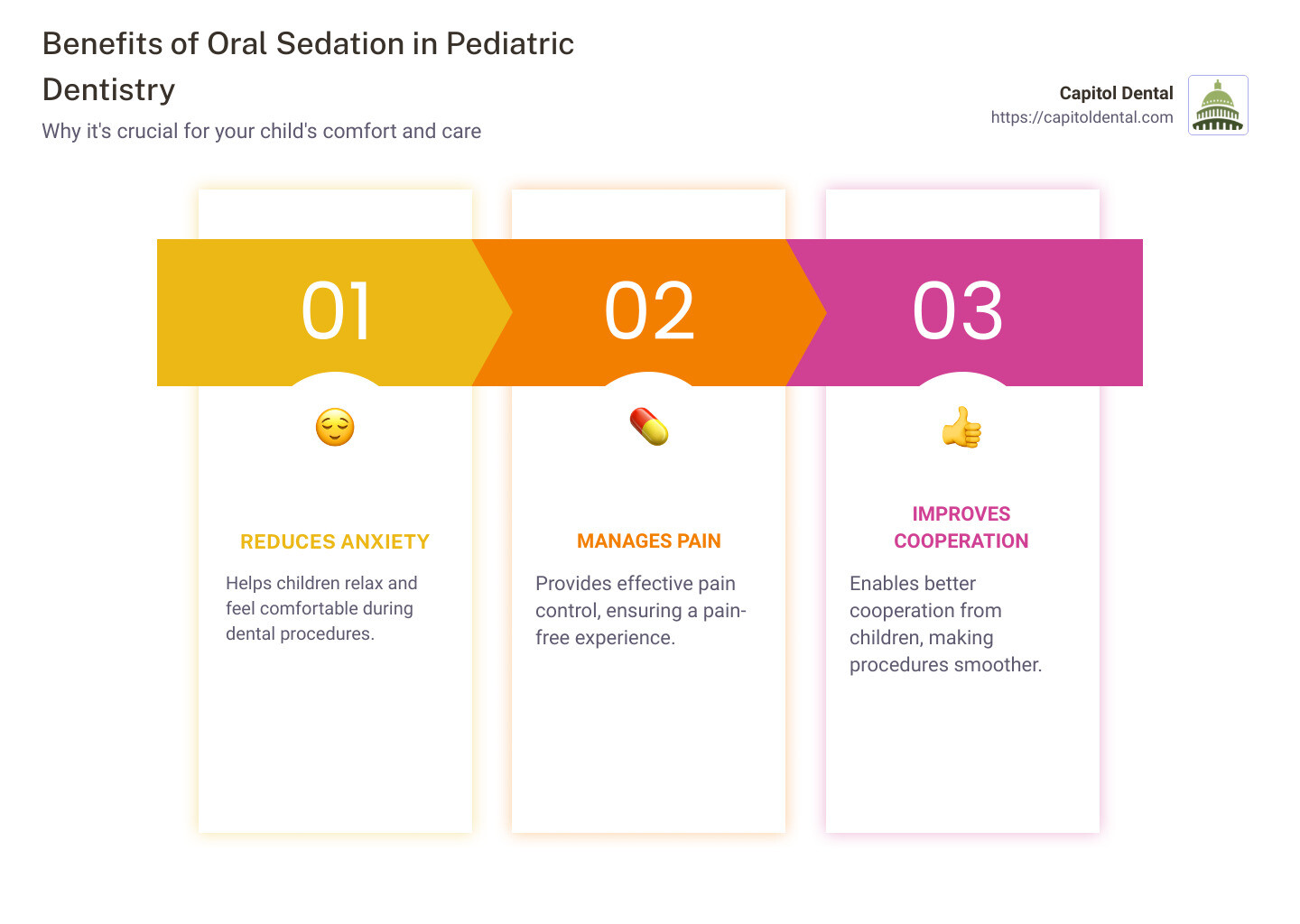
Reduces Anxiety: Many children feel anxious about visiting the dentist. Oral sedation can help calm their nerves, making the experience less scary.
Pain Management: Sedation helps manage pain effectively, ensuring that children are comfortable throughout the procedure.
Improves Cooperation: Sedation can make it easier for children to cooperate during dental treatments, which is particularly helpful for more complex procedures.
Better Outcomes: With less movement and anxiety, dentists can perform procedures more efficiently and effectively, leading to better overall outcomes.
Enhances Safety: By keeping children calm and still, sedation reduces the risk of injury during dental procedures.
Types of Oral Sedation
Pediatric dentists use different types of sedation depending on the child’s needs and the complexity of the procedure. Here are the main types:
Nitrous Oxide: Also known as “laughing gas,” nitrous oxide is a mild sedative inhaled through a mask. It helps children relax and wears off quickly after the procedure.
Oral Sedation: This involves giving the child a sedative pill to swallow before the dental appointment. The medication makes them feel sleepy and relaxed but still awake.
Intravenous (IV) Sedation: IV sedation delivers sedative drugs directly into the bloodstream through a vein. This method provides a deeper level of sedation and is used for more complex procedures.
General Anesthesia: General anesthesia puts the child into a deep sleep. It is reserved for extensive dental procedures and is usually administered in a hospital setting.
Oral sedation is a safe and effective way to ensure children have a positive dental experience. By reducing anxiety and pain, improving cooperation, and enhancing safety, it makes dental visits much more manageable for both kids and their parents.

How Oral Sedation Works
Oral sedation is a fantastic tool in pediatric dentistry that helps make dental visits stress-free for children. Here’s how it works and what you can expect.
Administration Methods
There are several ways to administer sedation to children:
Inhalation: Commonly known as laughing gas or nitrous oxide. This method uses a mask placed over the child’s nose. The child breathes normally and starts feeling relaxed within minutes.
Oral: Often referred to as “sleepy juice,” this involves giving the child a medicated liquid or pill to drink about an hour before the procedure. This method is needle-free, which is great for kids who are scared of injections.
Intravenous (IV): This method involves inserting a needle into a vein, usually in the arm or hand. IV sedation allows the dentist to adjust the sedation level during the procedure, making it ideal for longer or more complex treatments.
Duration and Effects
Sedation Duration: The length of time your child will be sedated depends on the type of sedation used. For example, nitrous oxide wears off quickly, usually within minutes after the mask is removed. Oral sedation and IV sedation last longer and may require a few hours to fully wear off.
Recovery Time: Recovery times also vary. With nitrous oxide, your child can resume normal activities almost immediately. For oral and IV sedation, your child may need a few hours to fully recover. It’s essential to have someone available to drive your child home if oral or IV sedation is used.
Post-Sedation Effects: After the sedation wears off, your child may still feel a bit groggy or confused. Some children experience mild side effects like headaches or nausea, but these are typically short-lived. Always follow the dentist’s post-sedation care instructions to ensure a smooth recovery.

Understanding how oral sedation works can help you and your child feel more comfortable about the dental visit. Next, we’ll discuss the safety and guidelines you should be aware of when considering oral sedation for your child.
Safety and Guidelines for Oral Sedation
Pre-Procedure Instructions
Safety is the top priority when it comes to oral sedation in pediatric dentistry. Both the American Academy of Pediatrics (AAP) and the American Academy of Pediatric Dentistry (AAPD) have set strict guidelines to ensure your child’s safety during dental procedures.
No food or drink after midnight before the procedure. This is crucial because sedation medication can cause vomiting. If your child vomits with a full stomach, they could choke or inhale the contents, which is life-threatening.
Medication restrictions are also essential. Do not give your child any medications before the procedure unless your dentist says it’s okay. Some medications can interact with sedation drugs and be unsafe.
Health assessment is another critical step. If your child is sick (vomiting, cough, congestion, fever), you may need to reschedule the appointment. Always inform your dentist about any health issues, allergies, or medications your child is taking.
Post-Procedure Care
After the procedure, your child will need close monitoring. Watch for any unusual symptoms like severe pain, vomiting, or fever. If these occur, contact your dentist immediately.
Pain management is another key aspect. Your dentist might recommend over-the-counter pain relievers like Tylenol® or Motrin® to help with discomfort.
Rest is vital for recovery. Encourage your child to take it easy for the first few days after the procedure. Limiting activity helps speed up recovery and avoids unexpected problems.
Good oral hygiene is essential even after the procedure. Help your child brush, floss, and use mouthwash to keep their gums and teeth healthy. This promotes faster healing and prevents future dental issues.
Follow-up appointments are crucial. These visits help your dentist monitor your child’s recovery and catch any potential problems early.
Safety Measures
Dentists follow strict safety measures to ensure your child’s well-being. The updated guidelines from AAP and AAPD require at least two trained professionals in the room: the dentist performing the procedure and an independent observer. This observer could be a physician anesthesiologist, a certified registered nurse anesthetist, or another qualified professional.
Monitoring equipment is used throughout the procedure to track your child’s heart rate, blood pressure, and oxygen levels. This ensures any issues are detected and addressed immediately.
All professionals involved must have CPR certification and be trained in Pediatric Advanced Life Support (PALS). This specialized training prepares them to handle any emergencies that might arise during the procedure.
Understanding these safety measures and guidelines can help you feel more confident about your child’s dental visit. Next, we’ll tackle some frequently asked questions about oral sedation in pediatric dentistry.
Frequently Asked Questions about Oral Sedation in Pediatric Dentistry
What oral sedatives are used in pediatric dentistry?
In pediatric dentistry, three common oral sedatives are used to help children relax during dental procedures:
- Midazolam: Often referred to by its brand name, Versed, this sedative is widely used due to its quick onset and short duration. It helps reduce anxiety and makes the child drowsy.
- Versed: This is another name for Midazolam. It is effective for short procedures and has the added benefit of causing some amnesia, so the child may not remember the procedure.
- Chloral Hydrate: This sedative is less commonly used nowadays but may still be an option for certain cases. It helps to calm the child and make them sleepy.
These medications are typically administered in liquid form and can take effect within 20 to 30 minutes.
How long does oral sedation last in kids?
The duration of oral sedation can vary depending on the medication used and the child’s individual response.
- Midazolam (Versed): The effects usually last between 30 minutes to an hour. However, the sedative can linger in the child’s system for a few hours, causing drowsiness even after the procedure is over.
- Chloral Hydrate: The sedation effect can last longer, typically up to 2 hours, with residual drowsiness potentially lasting a bit longer.
Recovery time is generally quick, but it’s important to monitor your child for a few hours post-procedure to ensure they are fully awake and alert.
What are the side effects of oral sedation for children?
While oral sedation is generally safe, there are some potential side effects to be aware of:
- Confusion: It’s common for children to feel a bit disoriented or confused as the sedation wears off.
- Grogginess: Your child may feel very sleepy or groggy for a few hours after the procedure.
- Amnesia: One of the intended effects of sedatives like Midazolam is amnesia, meaning your child may not remember the procedure at all.
- Headaches: Some children might experience mild headaches as a side effect.
- Nausea: Feeling nauseous or even vomiting can occur in some cases.
These side effects are usually mild and temporary. It’s always a good idea to discuss any concerns with your child’s dentist before the procedure. They can provide guidance on how to manage these side effects and ensure your child’s comfort.
Understanding these aspects can help you make an informed decision about your child’s dental care. Next, let’s explore the benefits of oral sedation and why it might be a good option for your child.
Conclusion
At Capitol Dental, we understand that your child’s comfort and safety are paramount when it comes to dental care. That’s why we offer comprehensive dental services tailored to meet the unique needs of each patient.
Oral sedation in pediatric dentistry is a key part of our approach, helping to ease anxiety and ensure a positive experience for your child. Our advanced sedation options, including oral sedation, nitrous oxide, and IV sedation, allow us to provide the appropriate level of care based on your child’s specific needs.
Personalized Care
We pride ourselves on offering personalized care that takes into account your child’s dental history and individual requirements. Our team works closely with you to develop a treatment plan that ensures the best possible outcomes. We believe that every child deserves a healthy smile and a stress-free dental experience.
Advanced Sedation Options
Our sedation options are designed to make dental visits as comfortable as possible. Whether it’s the gentle relaxation of nitrous oxide or the deeper sedation provided by oral or IV methods, we have the expertise to manage your child’s care effectively. Dr. Doyle, with over two decades of experience, ensures that all sedation procedures are safe and effective.
Comprehensive Services in Boise, Idaho
Located in the heart of Boise, Idaho, Capitol Dental offers a wide range of dental services under one roof. From routine check-ups and cleanings to specialized treatments, we are equipped to handle all your dental needs. Our state-of-the-art technology and compassionate care make us the go-to choice for families in the area.
Choosing Capitol Dental means you’re opting for a practice that puts your child’s well-being first. Our commitment to excellence in pediatric dentistry ensures that your child receives the highest quality care in a comfortable and supportive environment.
Ready to make your child’s dental visits anxiety-free? Book an appointment with Capitol Dental today and let us help your child achieve a healthy, beautiful smile.