

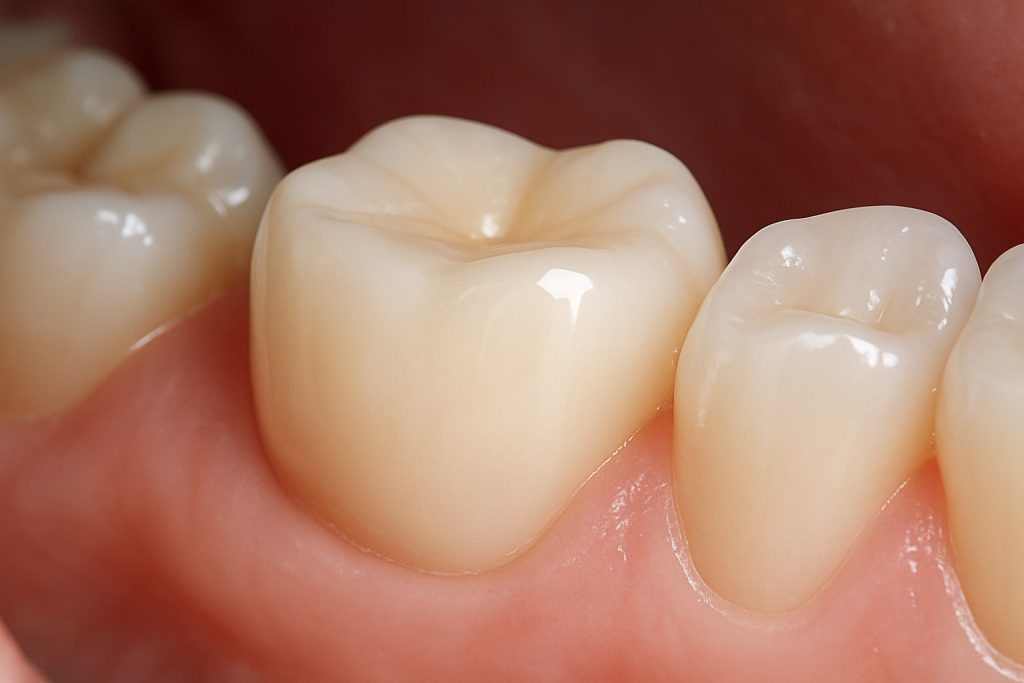

Why Porcelain Crowns Are a Top Choice for Restoring Molars
A porcelain crown on molar teeth offers an excellent balance of strength, natural appearance, and biocompatibility for restoring damaged back teeth. While molars endure significant chewing forces, modern porcelain materials have become strong enough to handle these demands while providing superior aesthetics compared to traditional metal crowns.
Quick Facts About Porcelain Crowns on Molars:
- Strength: Can withstand normal chewing forces when properly designed
- Appearance: Matches natural tooth color and translucency
- Durability: Typically lasts 10-15 years with proper care
- Temperature sensitivity: Porcelain conducts less heat than metal, reducing sensitivity
- Biocompatibility: Won’t cause allergic reactions like some metal crowns
- Best for: Visible molars where aesthetics matter alongside function
Many patients worry that porcelain isn’t strong enough for molars. However, advances in ceramic technology have made porcelain crowns a viable option for back teeth. The key is proper case selection and expert placement.
“Today all porcelain crowns are considered the most beautiful crown that a tooth can get,” notes one dental expert. This aesthetic advantage, combined with improved strength, makes porcelain an attractive choice even for molars.
The decision between porcelain and other materials like zirconia or metal depends on your specific needs, bite forces, and aesthetic priorities. Understanding these factors helps you make the best choice for your oral health.
Porcelain Crown on Molar: Strength, Procedure & Comparisons
Your molars work incredibly hard every day. These back teeth crush and grind food with forces that can reach over 200 pounds per square inch. When a molar needs restoration, choosing the right crown material and understanding what’s involved becomes really important for your long-term oral health.
When is a porcelain crown on molar necessary?
Sometimes a simple filling just won’t cut it anymore. A porcelain crown on molar becomes the best solution when your tooth structure is too damaged for a filling but the tooth can still be saved.
Extensive decay is one of the most common reasons we recommend crowns. When decay affects more than half of your tooth, a crown gives you the complete protection needed to prevent the tooth from breaking apart. Think of it as a protective helmet for your damaged tooth.
Large filling replacement often leads to crown placement too. Maybe you have an old silver filling that’s finally given up, or the tooth around it has started to crack. Those old amalgam fillings can actually cause problems over time because they expand and contract with temperature changes.
After root canal treatment, your molar becomes much more fragile. The inside of the tooth has been hollowed out, making it prone to fracture. Without a crown, root canal-treated molars have a much higher chance of failing completely. It’s like having a house with no roof – you need that protective covering.
Fracture lines or small cracks might not hurt yet, but they’re warning signs. We can often save these teeth by placing a crown that holds everything together and prevents the crack from spreading.
If you’re someone who grinds or clenches your teeth at night, your molars might need crowns to protect them from further wear. The crown restores your tooth to its proper height and gives you a strong chewing surface that can handle the extra pressure.
Sometimes bite problems cause certain molars to take on too much force. A crown can help redistribute these forces more evenly across your teeth.
Step-by-Step Procedure
Getting a porcelain crown on molar usually takes two visits to our office, though we also have same-day options if you prefer to get everything done at once.
Your first visit starts with local anesthesia to make sure you’re completely comfortable. We’ll then prepare your tooth by removing any damaged parts and shaping it to fit the crown perfectly. We only remove what’s necessary – our goal is to save as much healthy tooth as possible.
Next comes the fun part – digital scanning. Instead of those messy impression materials you might remember, we use a small camera to capture precise measurements of your tooth and the surrounding area. It’s quick and much more comfortable.
Before you leave, we’ll place a temporary crown to protect your tooth. We’ll give you specific instructions on how to care for it – mainly avoiding sticky foods and chewing on the other side when possible.
While you’re going about your normal routine, skilled lab technicians are crafting your permanent crown. This lab fabrication process typically takes one to two weeks and involves multiple quality checks to make sure everything fits perfectly.
Your second visit is usually shorter and more straightforward. We’ll remove the temporary crown, clean your tooth, and try in the permanent crown. If any small adjustments are needed, we’ll take care of those right away. Finally, we’ll cement the crown in place using strong dental cement and check your bite to make sure everything feels comfortable.
If you prefer to get everything done in one day, our same-day CAD/CAM option lets us complete the entire process in a single visit. We take digital impressions, and our in-office milling machine creates your crown in about 15-20 minutes. You’ll walk out with your permanent crown the same day.
More info about crowns on teeth
Strength & Comparison to Zirconia, PFM, Metal
Understanding how porcelain stacks up against other crown materials helps you make the best choice for your situation.
Porcelain crowns offer excellent aesthetics with natural-looking translucency that matches your other teeth beautifully. They’re biocompatible, meaning no allergic reactions, and they don’t conduct temperature as much as metal, which reduces sensitivity to hot and cold foods.
The main consideration with porcelain is that it can chip under extreme forces, so proper bite adjustment is important. If you’re a heavy grinder, we might recommend a different material or make sure you wear a nightguard.
Zirconia crowns are often considered the strongest option for molars. Made of roughly 90% zirconium oxide, they can handle much higher chewing forces than porcelain. The trade-off is that they’re more opaque and might not look quite as natural, especially if your molar shows when you smile.
Porcelain-fused-to-metal (PFM) crowns give you the best of both worlds – a strong metal core covered with porcelain for aesthetics. They’re very durable and can completely mask dark underlying tooth structure. Sometimes the metal shows through as a thin gray line at the gum, but this isn’t usually noticeable on back teeth.
Gold alloy crowns might not win any beauty contests, but they’re practically indestructible. They can last 20 years or more and cause very little wear to your opposing teeth. The downside is increased temperature sensitivity since gold conducts heat well.
Scientific research on porcelain-fused-to-metal crowns
| Crown Type | Strength | Aesthetics | Durability | Best For |
|---|---|---|---|---|
| Porcelain | Good | Excellent | 10-15 years | Visible molars, aesthetic priority |
| Zirconia | Excellent | Good | 15-20 years | Heavy chewers, strength priority |
| PFM | Very Good | Good | 12-18 years | Balance of strength and aesthetics |
| Gold Alloy | Excellent | Poor | 20+ years | Non-visible molars, maximum durability |
The right choice depends on your specific situation, bite forces, and how much the tooth shows when you smile. We’ll help you weigh all these factors to find the perfect solution for your needs.
Cost, Lifespan & After-Care
When you’re considering a porcelain crown on molar, you’re making an investment in both your oral health and your quality of life. Let’s talk about what you can realistically expect from this investment and how to make it last as long as possible.
How long does a porcelain crown on molar last?
The good news is that a porcelain crown on molar typically serves you well for 10-15 years with proper care. We’ve seen many crowns last even longer when patients take good care of them.
Your oral hygiene habits are the biggest factor in how long your crown will last. While the crown itself can’t get cavities, the tooth underneath it absolutely can. If bacteria and plaque build up around the edges of your crown, you could end up with decay that compromises the entire restoration. Daily brushing and flossing aren’t just suggestions – they’re essential for protecting your investment.
What you eat matters more than you might think. Your porcelain crown can handle a good steak or crusty bread just fine, but it’s not designed for ice cubes or hard candy. We’ve seen too many beautiful crowns chip because someone couldn’t resist crunching on ice. If you’re someone who tends to use your teeth as tools – opening packages, cracking nuts, or holding things – now’s a great time to break those habits.
Teeth grinding can be a crown’s worst enemy. If you’re a nighttime grinder (and many people don’t even realize they are), those grinding forces can wear down or crack your crown much faster than normal chewing would. A simple nightguard can protect your crown and help it reach its full lifespan potential.
Your regular dental visits play a huge role too. We can spot small problems before they become big ones. Sometimes a crown just needs a minor adjustment or cleaning around the edges to keep it healthy for years longer.
More info about how long dental crowns last
Cost & Insurance for porcelain crown on molar
The cost of a porcelain crown on molar varies quite a bit depending on where you live and the complexity of your case. Here in Boise, we work hard to keep our fees reasonable while never compromising on quality.
Insurance coverage typically helps with a significant portion of crown costs, usually covering about half when the crown is medically necessary. Every insurance plan is different though, so we’ll always check your specific benefits before starting treatment. We work with most PPO plans and can help you understand exactly what your out-of-pocket costs will be.
If you’re concerned about the upfront cost, don’t let that stop you from getting the treatment you need. We offer financing options that can break the cost into manageable monthly payments. Many patients find this makes crown treatment much more comfortable financially.
We believe in transparency, so we’ll always provide you with a detailed estimate before beginning any work. No surprises, no hidden fees – just honest pricing for quality care.
More info about porcelain dental crown cost
Care, Risks & Repairs
Taking care of your porcelain crown on molar isn’t complicated, but it does require some attention to detail. Think of it like caring for a nice piece of jewelry – with proper care, it’ll look great and function well for years.
Daily care is straightforward but important. Floss around your crown every day, paying special attention to where the crown meets your gum line. This is where problems usually start if they’re going to happen. Use a soft-bristled toothbrush and avoid toothpastes that are too abrasive – they can actually dull the surface of your crown over time.
Watch what you bite. Avoid chewing ice – this is the number one cause of crown fractures we see. Hard candies should be sucked, not bitten. Sticky foods like caramel can sometimes pull a crown loose if the cement has weakened over time.
Some sensitivity right after crown placement is completely normal. Your tooth is adjusting to its new covering, and this usually settles down within a few weeks. If sensitivity persists or gets worse, give us a call.
Small chips in porcelain can sometimes be repaired with a tooth-colored filling material, but larger damage usually means the crown needs to be replaced. The good news is that most crown problems are preventable with good care.
If your crown ever comes loose or falls out, don’t panic. Keep the crown safe and clean, and call us right away. We can often re-cement it if both the crown and tooth are in good shape. The key is getting in quickly – don’t wait and see if it’ll be okay.
Severe pain around a crowned tooth isn’t normal and needs prompt attention. This could signal a problem with the nerve inside the tooth or an infection that needs treatment.
Porcelain Fused Metal Crowns Front Teeth
Choosing Capitol Dental for Your Crown
When you’re ready to restore your molar with a beautiful, durable crown, we’d love to help you through the process. At Capitol Dental, we’ve been placing crowns for years, and we’ve learned that the key to success is combining good technique with genuine care for our patients.
Our technology makes the crown process more comfortable and accurate than ever. We use digital impressions instead of those messy impression materials – no more gagging on goopy stuff in your mouth. When appropriate, we can even make your crown the same day with our CAD/CAM system, so you don’t have to deal with a temporary crown at all.
We know dental procedures can make people nervous, which is why we offer sedation options to help you feel relaxed and comfortable. From simple nitrous oxide to oral sedation, we can find the right approach for your comfort level.
What sets us apart is that we handle all your dental needs right here in our Boise office. If you need a root canal before your crown, or if you want to discuss other improvements to your smile, we can coordinate everything seamlessly.
Your consultation is where we really get to know you and your specific needs. We’ll examine your tooth thoroughly, discuss all your options, and answer every question you have. We believe informed patients make the best decisions about their dental health.
After your crown is placed, we’re still here for you. We provide detailed care instructions and are always available if you have questions or concerns. Your success is our success, and we’re committed to helping your crown last as long as possible.
Ready to restore your molar and get back to comfortable chewing? Give us a call to schedule your consultation. We’re here to help you make the best decision for your smile and your health.