



3D Dental Crown Printer: The #1 Ultimate Guide in 2024
Introduction
3D dental crown printers are revolutionizing how dentists craft dental restorations. By using advanced technology, these printers offer a faster, more precise, and cost-effective way to create dental crowns.
Overview:
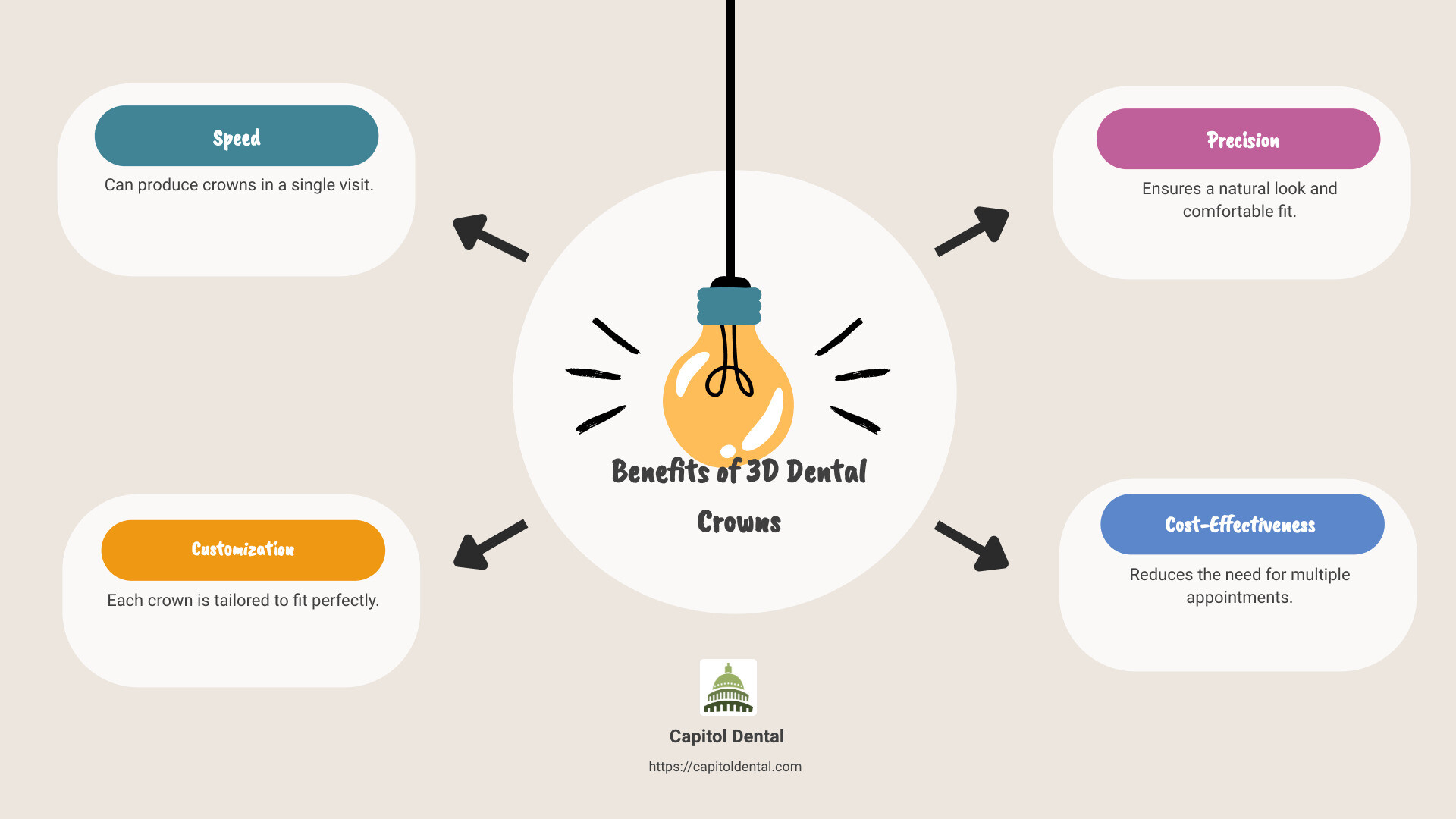
– Speed: They can produce crowns in a single visit.
– Customization: Each crown is tailored to fit perfectly.
– Precision: Ensures a natural look and comfortable fit.
– Cost-Effective: Reduces the need for multiple appointments.
Capitol Dental is at the forefront of this transformation, using cutting-edge 3D printing technology to provide our patients with superior dental care. Our state-of-the-art equipment ensures you receive high-quality crowns that look and feel like your natural teeth.
By integrating this technology, we aim to provide a seamless, stress-free dental experience that prioritizes both comfort and quality.
What is a 3D Dental Crown Printer?
Definition
A 3D dental crown printer is a specialized device that creates dental crowns using three-dimensional printing technology. These printers use digital designs to produce crowns that fit precisely and look natural. Instead of traditional methods that require multiple appointments and manual labor, 3D printers streamline the process, making it faster and more efficient.
Technology
The technology behind 3D dental crown printers is both advanced and fascinating. At Capitol Dental, we utilize state-of-the-art printers that employ Digital Light Processing (DLP) and Stereolithography (SLA). These methods allow for high precision and fine details in the crowns produced.
One standout feature is the NanoFit 385 technology, which operates at a wavelength of 385nm. This ensures the crowns have an accurate fit, natural-looking finish, and stunning clarity. Additionally, the HyperPrint feature leverages heat and closed-loop software to boost printing speed by up to 50%.
Process
The process of creating a 3D printed dental crown involves several steps:
- Intraoral Scanning: First, a digital scan of your mouth is taken using an intraoral scanner. This provides a detailed 3D image of the area needing a crown.
- Digital Design: The scan is then used to create a digital design of the crown. Advanced software ensures that the design matches the exact shape and size required for a perfect fit.
- Printing: The digital design is sent to the 3D dental crown printer. Using materials like Flexcera Smile Ultra+ resin, the printer creates the crown layer by layer. This resin is known for its strength and moisture resistance, making it ideal for durable and natural-looking crowns.
- Post-Processing: Once printed, the crown undergoes post-processing, including cleaning and curing, to ensure it is ready for use.
Dr. August de Oliveira, a dental professional, highlights the benefits: “For me, the combination of the Einstein 3D printer and Flexcera Smile Ultra+ resin will help this industry finally deliver applications with stunning clarity, a perfect, customized fit, and an impressively natural-looking finish.”
Key Benefits
- Speed: Printing a crown can be done in just a few hours, reducing the need for multiple dental visits.
- Customization: Each crown is tailored to fit perfectly, ensuring comfort and functionality.
- Accuracy: Digital designs and precise printing result in crowns that fit and look like natural teeth.
At Capitol Dental, we pride ourselves on leveraging these cutting-edge technologies to enhance patient care. Our investment in advanced 3D printing equipment ensures that you receive the best possible dental crowns, combining speed, accuracy, and aesthetics.

Next, we will explore the evolution of dental crown printing and how it has transformed modern dentistry.
The Evolution of Dental Crown Printing
Dental crown printing has significantly evolved over the years, transitioning from traditional methods to today’s advanced 3D printing technology.
History
Traditionally, creating dental crowns was a lengthy process. Dentists would take a physical mold of the patient’s tooth and send it to a lab, where the crown would be crafted over several weeks. This method often required multiple patient visits.
Advances
The introduction of 3D printing has revolutionized dental crown manufacturing by significantly speeding up the process and enhancing precision. Capitol Dental utilizes the latest in 3D printing technology to efficiently produce high-quality dental crowns.
Current Technologies
At Capitol Dental, we use advanced 3D printing technology to create crowns quickly and accurately. This allows for the production of a finished dental product within a single visit, greatly reducing the time and cost associated with traditional methods.
How 3D Dental Crown Printers Work
Intraoral Scanning
The process begins with intraoral scanning, which replaces the traditional method of taking dental impressions with putty. A small, handheld scanner captures detailed images of your teeth and gums, creating a digital map of your mouth.
Digital Design
The scanned data is then used to digitally design the crown, ensuring it matches the exact shape, size, and color of your natural teeth.
Printing Process
The design file is sent to the 3D printer, which constructs the crown layer by layer using advanced materials. This process is known as additive manufacturing and is both precise and quick. At Capitol Dental, this means you can receive your crown in just one visit, saving time and enhancing comfort.
Benefits of Using a 3D Dental Crown Printer
Speed
One of the major advantages of using a 3D dental crown printer is the speed of production. Traditional crowns typically require multiple appointments over several weeks. With 3D printing, the entire process can be completed in a single visit at Capitol Dental.
Cost-Effectiveness
3D printing reduces the need for multiple visits and temporary crowns, cutting down on overall costs and making the procedure more affordable for patients.
Customization
Each crown is precisely tailored to match the patient’s specific dental structure, ensuring a perfect fit and natural appearance.
Accuracy
The high precision of 3D printing ensures that the crowns fit perfectly, reducing the need for adjustments and improving the overall patient experience.
Types of Materials Used in 3D Printed Dental Crowns
When it comes to 3D printed dental crowns, the choice of material is crucial. The main materials used are resins, ceramics, and composites. Each has its own advantages and is chosen based on the specific needs of the patient.
Resins
Resins are popular in 3D dental crown printers due to their versatility and ease of use.
- Flexibility: Resins can be easily manipulated to create detailed and intricate designs.
- Cost-Effective: Generally more affordable than other materials, making them a good option for temporary crowns.
- Speed: Resin crowns can be printed quickly, often within a single visit.
Example: Desktop Health’s Einstein 3D printer uses Flexcera Smile Ultra+ resin, which allows dentists to print crowns, bridges, veneers, and more on-site while the patient waits. This innovation has made same-day permanent prosthetics a reality.
Ceramics
Ceramic materials are highly valued for their aesthetic qualities and durability.
- Natural Look: Ceramics closely mimic the appearance and translucency of natural teeth, making them ideal for visible areas.
- Durability: Strong and resistant to wear, though not as tough as metal.
- Biocompatibility: Metal-free, reducing the risk of allergic reactions.
Example: Lithoz, in collaboration with Ivoclar, developed a lithium disilicate material for 3D printing dental restorations. This material offers high-quality, patient-specific crowns that are both durable and aesthetically pleasing.
Composites
Composite materials combine different substances to take advantage of their best qualities.
- Customization: Can be tailored to match the color and texture of natural teeth.
- Strength: More durable than resins but not as strong as pure ceramics or metals.
- Versatility: Suitable for a range of dental applications, including crowns, inlays, and onlays.
Fact: According to a survey on 3D printing trends, the use of composite materials in dental applications is expected to grow, driven by the need for more personalized dental solutions.
Next, we’ll compare 3D printed crowns with traditional crowns to see how they stack up in terms of durability, aesthetics, cost, and time efficiency.
Comparing 3D Printed Crowns and Traditional Crowns
When deciding between 3D printed crowns and traditional crowns, it’s important to consider several factors: durability, aesthetics, cost, and time efficiency.
Durability
3D Printed Crowns:
– Made from advanced materials like Flexcera Smile Ultra+ resin, which is up to three times more fracture-resistant than some competitors.
– High moisture resistance helps prevent discoloration and wear over time.
Traditional Crowns:
– Often made from metals or porcelain-fused-to-metal (PFM), offering strong durability.
– Ceramic crowns are durable but can be prone to chipping under heavy biting forces.
Aesthetics
3D Printed Crowns:
– Provide a natural-looking finish with lifelike translucence, thanks to materials like Flexcera.
– Custom-fit for each patient, ensuring a seamless match with existing teeth.
Traditional Crowns:
– Ceramic crowns offer excellent aesthetics, blending well with natural teeth.
– PFM crowns can mimic natural teeth but sometimes show metal at the gum line.
Cost
3D Printed Crowns:
– Generally more cost-effective due to reduced lab fees and faster production times.
– Initial investment in a 3D dental crown printer can be high but is offset by long-term savings.
Traditional Crowns:
– Often more expensive due to higher lab costs and multiple dental visits.
– Metal crowns tend to be less costly but lack aesthetic appeal.
Time Efficiency
3D Printed Crowns:
– Significantly faster production, with advanced printers like Desktop Health’s Einstein capable of curing material at 68mm per hour.
– Can be designed, printed, and placed in a single visit, reducing the need for temporaries.
Traditional Crowns:
– Typically require multiple visits: one for impressions and another for fitting the final crown.
– Lab turnaround times can extend the process to several weeks.
Case Study: Dr. August de Oliveira, a dentist using the Einstein 3D printer and Flexcera Smile Ultra+ resin, reported high-quality results with stunning clarity and perfect fit. This technology has helped many patients choose advanced dental procedures they might have otherwise avoided.
In summary, while traditional crowns have their strengths, 3D printed crowns offer superior customization, speed, and cost-efficiency, making them an attractive option for modern dental practices.
Next, we’ll explore the role of 3D printing in modern dentistry and its future trends.
The Role of 3D Printing in Modern Dentistry
Innovations
3D printing is revolutionizing the dental industry with groundbreaking innovations. One standout example is the Einstein 3D printer by Desktop Health. This advanced printer, paired with Flexcera Smile Ultra+ resin, allows dentists to create high-quality, patient-specific prosthetics like crowns, veneers, and bridges in mere hours.
Dr. Shao, a dentist who adopted 3D printing early, shared that the technology helped him produce precise surgical guides and mockups. This not only saved time but also convinced patients to proceed with complex treatments by showing them exact replicas of the final results.
Impact
The impact of 3D printing on dentistry is profound. For instance, SprintRay’s 3D printers have enabled dental practices to become one-stop shops for various dental products. This includes nightguards, implants, crowns, and clear aligners—all produced on-site.
Tim Schmitt from Dental Product Shopper highlighted that the biggest challenge is educating dentists about this new technology. However, once mainstream, 3D printing could disrupt traditional dental practices by making it standard to print crowns and implants right in the office.
Future Trends
Looking ahead, the future of 3D printing in dentistry is promising. Researchers at KU Leuven University are exploring dental tissue engineering to regrow teeth from the root. This could potentially address dental conditions caused by trauma or developmental abnormalities, especially in children.
Moreover, companies are continually improving their 3D printing technologies. For example, Desktop Health’s HyperPrint technology boosts the build speed of their printers by up to 50%. This means faster production times and shorter patient waiting periods.
In summary, 3D printing is set to become an integral part of modern dentistry, offering faster, more customized, and cost-effective solutions for dental care.
Next, we’ll answer some frequently asked questions about 3D dental crown printers.
Frequently Asked Questions about 3D Dental Crown Printers
Can dental crowns be 3D printed?
Yes, dental crowns can be 3D printed! 3D dental crown printers use advanced technology to create custom crowns right in the dental office. This is a game-changer for both dentists and patients.
For instance, SprintRay Inc. has developed a 3D printer that can produce a finished dental crown within an hour. This means patients can get their permanent crowns in a single visit, without the need for temporary crowns or multiple appointments.
How much does a 3D printed crown cost?
The cost of a 3D printed crown can vary, but it’s generally comparable to traditional crowns. On average, you can expect to pay between $500 and $1,500 per crown. The price depends on factors like the material used and the complexity of the design.
3D printing can also reduce costs in the long run. By eliminating the need for multiple visits and temporary crowns, both patients and dental offices save time and money.
How long do 3D printed crowns last?
3D printed crowns are designed to be durable and long-lasting. With proper care, they can last as long as traditional crowns—typically around 10 to 15 years.
The longevity of a 3D printed crown depends on the material used and how well you maintain your dental hygiene. For example, ceramic crowns are popular for their durability and natural appearance. They are ideal for front teeth and can last many years with good care.
Proper care tips:
- Brush twice daily with a soft-bristle toothbrush.
- Floss daily to remove plaque and food particles.
- Avoid hard foods like ice and hard candies that can crack the crown.
- Visit your dentist regularly for check-ups and cleanings.
By following these tips, you can ensure your 3D printed crown remains strong and looks great for years.
Next, let’s explore the types of materials used in 3D printed dental crowns.
Conclusion
At Capitol Dental, we are committed to staying at the forefront of dental technology to provide our patients with the best possible care. Our investment in 3D dental crown printers allows us to offer crowns that are not only durable and natural-looking but also customized to each patient’s unique needs.
Capitol Dental: Leading the Way
We believe in the power of innovation to improve patient outcomes. By incorporating 3D printing into our practice, we can produce dental crowns with unprecedented precision and speed. This technology not only enhances the quality of our dental restorations but also reduces the time you spend in the dental chair.
Future of Dental Technology
The future of dental technology is bright. Innovations like 3D printing are transforming how we approach dental care. According to a recent article, the dental 3D printing industry is expected to grow significantly in the coming years. This growth is driven by the demand for cosmetic dentistry and the challenges associated with traditional methods of dental product manufacturing.
Patient Benefits
Patients benefit greatly from 3D printed dental crowns. Here’s how:
- Speed: Traditional crowns can take weeks to manufacture and fit. With 3D printing, this process is reduced to hours, allowing for same-day crowns in some cases.
- Customization: Each crown is tailored to the exact specifications of the patient’s mouth, ensuring a perfect fit and natural appearance.
- Accuracy: Digital design and precision printing result in crowns that fit better and last longer.
- Cost-Effectiveness: While the initial investment in 3D printing technology is significant, the long-term savings in time and materials can reduce overall costs.
By choosing Capitol Dental, you’re opting for cutting-edge technology that enhances the quality and efficiency of your dental care. Your smile is our priority, and we are excited to be part of your journey to better oral health.
For more information about our cosmetic dentistry services and how we utilize 3D printing technology, visit our cosmetic dentistry page.