



Resin Tooth Crown: Top Benefits & FAQs in 2024
Why Resin Tooth Crowns Are Important
If you’re looking for a durable, aesthetically pleasing, and affordable dental solution, a resin tooth crown might be the answer. Dental crowns, also known as “caps,” are coverings that fit over existing teeth or implants to restore function and appearance. At Capitol Dental, we prioritize delivering advanced and compassionate dental care to our Boise community.
Here’s a quick overview of resin tooth crowns:
- Material: Made from composite resin for a natural look.
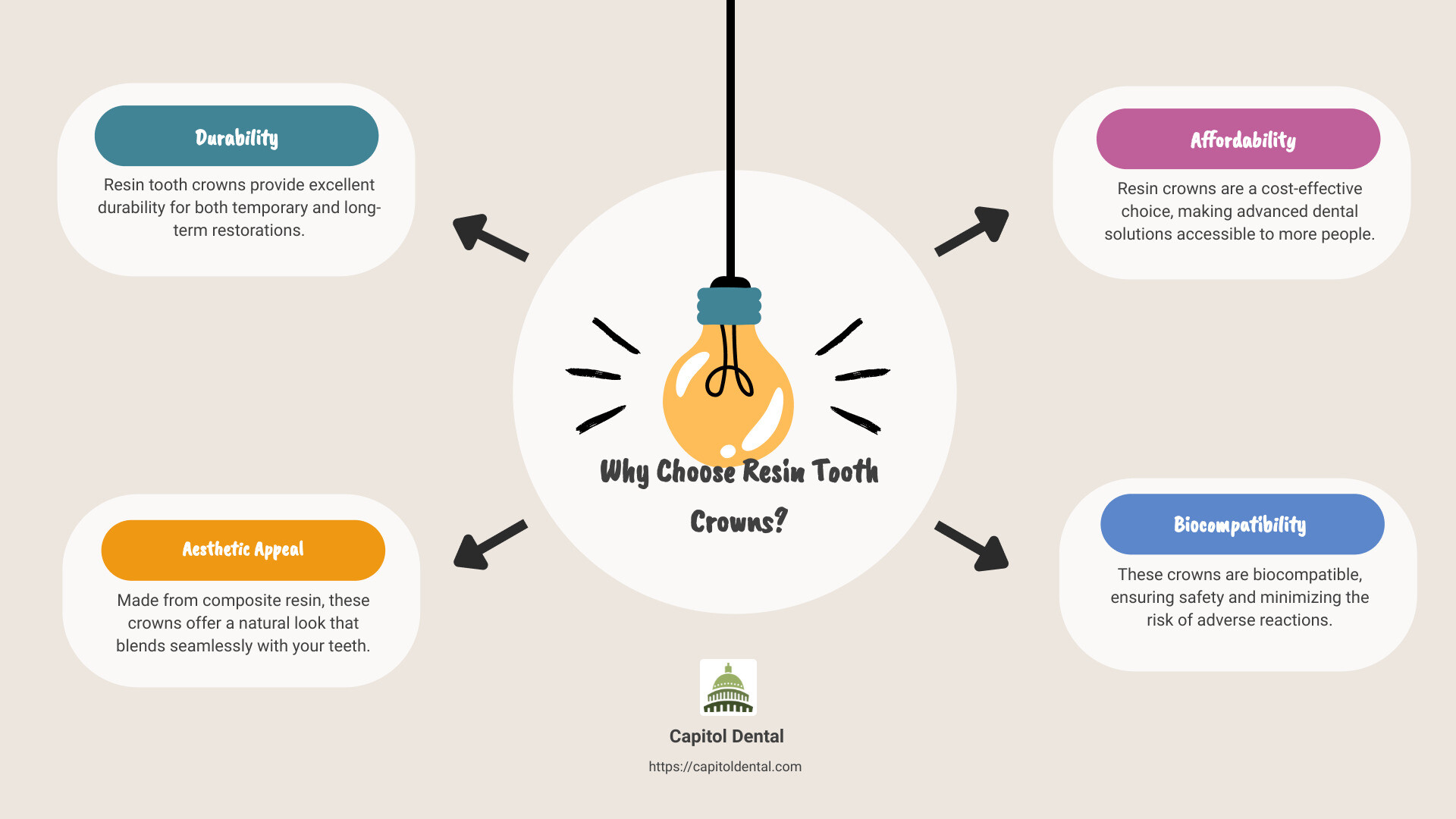
- Benefits: Affordable, aesthetically pleasing, and biocompatible.
- Use Cases: Ideal for temporary restorations, as well as long-term solutions for front and back teeth.
I’m Dr. Ryan Doyle, DDS. My journey in dentistry has been marked by a commitment to continuous learning and delivering the best patient care. With my expertise in resin tooth crowns, I aim to provide solutions that enhance both function and appearance.
Let’s dive into what makes resin tooth crowns a versatile and valuable option for your dental needs.
What is a Resin Tooth Crown?
A resin tooth crown is a type of dental cap used to restore the structure, function, and appearance of a damaged or decayed tooth. Think of it as a protective cover that fits snugly over your tooth, much like a hat. This cover helps to strengthen the tooth and restore its natural look.
Definition
A resin tooth crown is made from composite resin, a durable material that can be color-matched to blend seamlessly with your natural teeth. This makes it an excellent choice for those concerned about aesthetics. Composite resin is a mixture of plastic and fine glass particles, which gives the crown its tooth-like appearance and strength.
Dental Composite
Composite resin, commonly used in fillings, is customizable to match the appearance of surrounding teeth. This material can also be used to make solid crowns with curing and drying. Composite resin crowns are suitable for people who are sensitive to both metal and porcelain materials. Although composite crowns are not the sturdiest or most resilient, they are a viable option for dental restorations.
Tooth-Shaped Cap
A resin tooth crown fits over your entire tooth, like a snug hat. To ensure a proper fit, a dentist will need to remove a small amount of enamel before bonding your new crown in place. This process helps create a better fit and ensures the crown stays securely in place.

Resin crowns provide a gentle alternative for those who experience dental anxiety or desire a seamless blend with their existing smile. Thanks to advancements in 3D printing and other digital technologies, resin crowns can be quickly and precisely fabricated to offer long-term benefits without breaking the bank.
Next, let’s explore the benefits of resin tooth crowns and why they might be the right choice for you.
Types of Dental Crowns
Dental crowns come in various materials, each with unique benefits and drawbacks. Here’s a quick overview of the most common types:
Porcelain Crowns
Porcelain crowns are known for their natural appearance. They blend seamlessly with your existing teeth, making them ideal for front teeth. Porcelain is also non-reactive, reducing sensitivity to hot and cold foods.
Pros:
– Aesthetics: Look very natural.
– Biocompatible: No risk of metal allergies.
Cons:
– Durability: Can chip if you grind your teeth.
– Cost: More expensive than some other options.
Gold Crowns
Gold crowns are highly durable and can withstand heavy chewing forces, making them perfect for molars. They are also gentle on opposing teeth.
Pros:
– Durability: Extremely strong and long-lasting.
– Comfort: Less reactive, so it’s gentle on surrounding teeth.
Cons:
– Aesthetics: Not visually appealing.
– Cost: Can be expensive.
Metal Crowns
Metal crowns, often made from alloys like nickel or stainless steel, are incredibly strong and durable. They are a good option for molars that aren’t visible.
Pros:
– Strength: Can withstand heavy biting forces.
– Longevity: Lasts a long time.
Cons:
– Appearance: Metallic color is noticeable.
– Allergies: Some people may have metal allergies.
Hybrid Crowns (Porcelain Fused to Metal)
Hybrid crowns combine the durability of metal with the aesthetics of porcelain. They are often used for both front and back teeth.
Pros:
– Strength: Metal core offers durability.
– Aesthetics: Porcelain overlay mimics natural teeth.
Cons:
– Gum Line: Metal can sometimes show through at the gum line.
– Cost: Can be more expensive than all-metal crowns.
Resin Crowns
Resin crowns are made from composite resin, a synthetic material that can be color-matched to your teeth. They are less expensive and offer a good balance of aesthetics and functionality.
Pros:
– Affordability: Generally less expensive.
– Aesthetics: Can be color-matched to your teeth.
– Comfort: Less reactive and gentle on surrounding teeth.
Cons:
– Durability: Less durable than porcelain or metal.
– Lifespan: May need to be replaced more frequently.
Temporary Crowns
Temporary crowns are used as a short-term solution while you wait for your permanent crown to be made. They are usually made from acrylic or stainless steel.
Pros:
– Quick Solution: Provides immediate protection.
– Cost: Generally inexpensive.
Cons:
– Durability: Not meant to last long.
– Aesthetics: Not as visually appealing as permanent crowns.
Each type of crown has its own set of benefits and trade-offs. Your dentist will help you choose the best option based on your specific needs and preferences.
Next, let’s dive into the benefits of resin tooth crowns and why they might be the right choice for you.
Benefits of Resin Tooth Crowns
Affordability
One of the biggest advantages of resin tooth crowns is their cost-effectiveness. Compared to other materials like porcelain or gold, resin crowns are generally more affordable. This makes them an excellent option for those who need dental restoration but are on a budget. With resin crowns, you get quality care without breaking the bank.
Aesthetics
Resin crowns are designed to match the color of your natural teeth, providing a seamless look. Made from ceramic-filled resin, they offer a tooth-colored appearance that blends well with your existing smile. This is especially important for front teeth, where aesthetics play a crucial role.
Biocompatibility
Resin tooth crowns are biocompatible, meaning they are safe for use in the human body. This is a significant benefit for individuals who are sensitive to metals or other materials commonly used in dental restorations. With a resin crown, you can have peace of mind knowing that it’s a safe option for your mouth.
Low Water Absorption
Resin crowns have low water absorption rates, which means they are less likely to age, discolor, or accumulate plaque over time. This feature helps maintain the crown’s appearance and functionality, ensuring a longer lifespan. It also reduces the likelihood of bacterial growth, contributing to better oral hygiene.
Smooth Finish
The smooth finish of resin tooth crowns makes them not only visually appealing but also comfortable to wear. A smooth surface minimizes irritation to surrounding tissues and makes it easier to keep the crown clean. This smoothness also helps in reducing wear and tear on adjacent teeth, unlike some other materials that might cause friction.
In the next section, we will explore how resin tooth crowns are made, including the advanced techniques like 3D printing and post-processing.
How Resin Tooth Crowns are Made
Creating a resin tooth crown involves advanced techniques that ensure precision, durability, and aesthetics. Here’s a step-by-step look at the process:
3D Printing
The journey of a resin tooth crown often begins with 3D printing. This technology allows for highly accurate and customizable crowns tailored to each patient’s unique dental structure.
- Digital Scanning: The dentist first scans the patient’s tooth using a digital scanner. This creates a detailed 3D model of the tooth.
- Design: Using specialized software, the scanned model is adjusted to design the perfect crown. The design is then sent to a 3D printer.
- Printing: The 3D printer, often a high-precision device like the Form 3B printer, prints the crown using Formlabs Permanent Crown Resin. This resin is chosen for its strength, biocompatibility, and aesthetic qualities.
Curing
Once the crown is printed, it undergoes a curing process to harden and strengthen the material.
- Initial Curing: The printed crown is exposed to light and heat in a curing unit. This step solidifies the resin and prepares it for further processing.
- Post-Curing: For optimal performance and biocompatibility, the crown undergoes two post-curing cycles at 60°C for 20 minutes each. Between these cycles, supports are removed, and the crown is sandblasted to ensure a smooth finish.
Post-Processing
After curing, the crown needs to be thoroughly cleaned and polished.
- Washing: The crown is washed in isopropyl alcohol (IPA) for 3 minutes to remove any residual resin. It’s important not to exceed this time to maintain the quality of the final product.
- Final Touches: Any remaining resin is removed using an IPA-filled squeeze bottle and an IPA-soaked brush. This ensures the crown is clean and free of any residue.
- Polishing: The crown is then polished to achieve a smooth, natural-looking finish. This step enhances both the appearance and comfort of the crown.
By leveraging these advanced techniques, resin tooth crowns provide a perfect blend of strength, aesthetics, and comfort. The use of Formlabs Permanent Crown Resin ensures that the crowns are durable and biocompatible, giving patients and clinicians peace of mind.
In the next section, we will compare resin tooth crowns with other materials, highlighting their unique advantages and potential drawbacks.
Comparing Resin Tooth Crowns with Other Materials
When choosing a dental crown, it’s important to compare resin tooth crowns with other popular materials. Let’s break down how resin crowns stack up against porcelain, gold, metal, and hybrid crowns.
Composite vs. Porcelain
Natural Appearance: Porcelain crowns are known for their realistic look. They mimic the color and translucency of natural teeth, making them ideal for front teeth. Resin crowns are also customizable to match the appearance of your teeth but may not achieve the same level of translucency as porcelain.
Heat Sensitivity: Porcelain doesn’t conduct heat and cold well, which reduces sensitivity to hot and cold foods. This can be a big plus for many patients. Resin crowns also offer reduced sensitivity, making them comfortable for daily use.
Durability: Porcelain crowns are strong but can be more brittle than other materials. They may chip or crack if you grind your teeth or chew on hard objects. Resin crowns are less durable than porcelain and may wear down faster, especially if you have a habit of grinding your teeth.
Composite vs. Gold
Durability: Gold crowns are extremely strong and can withstand heavy chewing forces. They are particularly suitable for molars, where the pressure is highest. Resin crowns, on the other hand, are less durable but more affordable.
Aesthetic Limitations: The biggest drawback of gold crowns is their appearance. They are very noticeable and don’t blend with natural teeth, making them less ideal for visible areas. Resin crowns offer a more natural look, which is better for front teeth.
Biocompatibility: Gold is less likely to cause allergic reactions and is gentle on opposing teeth, reducing wear. Resin crowns are also biocompatible and suitable for those sensitive to metal.
Composite vs. Metal
Strength: Metal crowns, including those made from alloys, are incredibly strong and durable. They can handle heavy biting forces and are less likely to break. Resin crowns are less durable but offer a more natural appearance.
Aesthetics: Metal crowns are highly visible and not aesthetically pleasing. Resin crowns, with their tooth-colored appearance, are a better choice for a natural look.
Cost: Metal crowns can be expensive due to the cost of materials. Resin crowns are generally more affordable, making them a cost-effective option for many patients.
Composite vs. Hybrid
Combination Benefits: Hybrid crowns, like porcelain fused to gold, offer the best of both worlds—strength and aesthetics. The gold base provides durability, while the porcelain overlay offers a natural look. Resin crowns provide a balance of affordability and aesthetics but may not match the durability of hybrids.
Customization: Hybrid crowns can be customized to match the natural teeth while offering the strength of metal. Resin crowns are also customizable but may not achieve the same level of durability.
Comfort: Both hybrid and resin crowns aim to provide comfort. However, hybrids might be more suitable for patients needing both strength and a natural appearance.
By understanding these comparisons, you can make an informed decision about which type of crown best suits your needs. Next, we’ll explore the various applications of resin tooth crowns to see where they excel.
Applications of Resin Tooth Crowns
Resin tooth crowns are incredibly versatile and can be used in a variety of dental situations. Let’s explore some of the key applications:
Dental Restorations
Resin crowns are perfect for restoring damaged teeth. If you have a cracked, chipped, or decayed tooth, a resin crown can cover it up and restore its function. It’s like giving your tooth a protective hat that shields it from further damage.
Example: Imagine you have a tooth that’s severely decayed. Instead of extracting it, your dentist can use a resin crown to cover the decay, allowing you to keep your natural tooth while restoring its function and appearance.
Tooth Protection
Resin crowns also offer excellent protection for your teeth. They act as a barrier against bacteria and acids that can cause further decay and damage. This is especially useful if you’ve had a root canal or a large filling that leaves your tooth vulnerable.
Fact: According to Capitol Dental, resin crowns are biocompatible and have a low tendency to age, discolor, or accumulate plaque. This makes them an excellent choice for long-term tooth protection.
Aesthetic Improvements
One of the best things about resin crowns is their aesthetic appeal. They can be color-matched to blend seamlessly with your natural teeth, making them an ideal choice for front teeth restorations.
Quote: Dr. Samantha Rawdin, a prosthodontist, states, “Resin crowns provide a gentle alternative for those who experience dental anxiety or desire a seamless blend with their existing smile.”
Resin crowns are a great way to improve the look of your smile while also providing functional benefits. They are less expensive than porcelain crowns but still offer a natural appearance.
By understanding the various applications of resin tooth crowns, you can see how versatile and beneficial they are for dental restorations, tooth protection, and aesthetic improvements.
Frequently Asked Questions about Resin Tooth Crowns
What is the lifespan of a resin tooth crown?
Resin tooth crowns typically last between five to fifteen years. The lifespan can vary based on your oral hygiene, eating habits, and regular dental check-ups. While resin is not as durable as porcelain or gold, it offers a cost-effective solution for dental restoration.
Tip: To extend the lifespan of your resin crown, avoid hard foods, maintain good oral hygiene, and use a nightguard if you grind your teeth.
Are resin tooth crowns suitable for everyone?
Yes, resin tooth crowns are suitable for many people, especially those looking for an affordable and aesthetic solution. They are particularly useful for:
- Temporary solutions: Resin crowns are often used as temporary crowns while waiting for a permanent one.
- Front teeth: Due to their tooth-colored appearance, they blend well with natural teeth, making them a good choice for front teeth.
- Metal sensitivity: Resin crowns are ideal for people who are sensitive to metal or porcelain.
However, they might not be the best choice for those with a strong bite or who grind their teeth, as they are not as durable as other materials like porcelain or zirconia.
How do I care for my resin tooth crown?
Proper care is essential to maintain the longevity and appearance of your resin tooth crown. Here are some tips:
- Good oral hygiene: Brush twice a day and floss daily to keep your crown and surrounding teeth clean.
- Avoid hard foods: Hard foods like nuts or ice can damage or dislodge your crown.
- Use a nightguard: If you grind your teeth at night, a nightguard can protect your crown from excessive wear.
- Regular dental check-ups: Visit your dentist regularly to ensure your crown is in good condition and to address any issues early.
Pro Tip: To keep your resin crown looking its best, avoid consuming staining foods and beverages like coffee, tea, and red wine.
By addressing these common questions, we hope to provide you with a clearer understanding of resin tooth crowns. Up next, we’ll dive into the overall benefits and personalized care offered at Capitol Dental.
Conclusion
At Capitol Dental, we take pride in offering personalized care to each of our patients. We understand that every smile is unique, and we tailor our dental solutions to meet your specific needs and preferences. Whether you’re considering a resin tooth crown for its affordability, aesthetics, or other benefits, we ensure that the final result enhances your smile and improves your dental health.
Our comprehensive services cover all aspects of dental care. From routine check-ups to complex cosmetic procedures, we have the expertise and technology to meet all your dental needs. Our goal is to make every visit to Capitol Dental a positive and comfortable experience.
If you’re considering resin tooth crowns or any other dental restoration, we invite you to learn more about our services and how we can help you achieve a beautiful, healthy smile.
Learn more about our cosmetic dentistry services and schedule your consultation today!