



Digital Dental X-Ray Sensor: Top 5 Picks to Boost Your Practice
Introduction
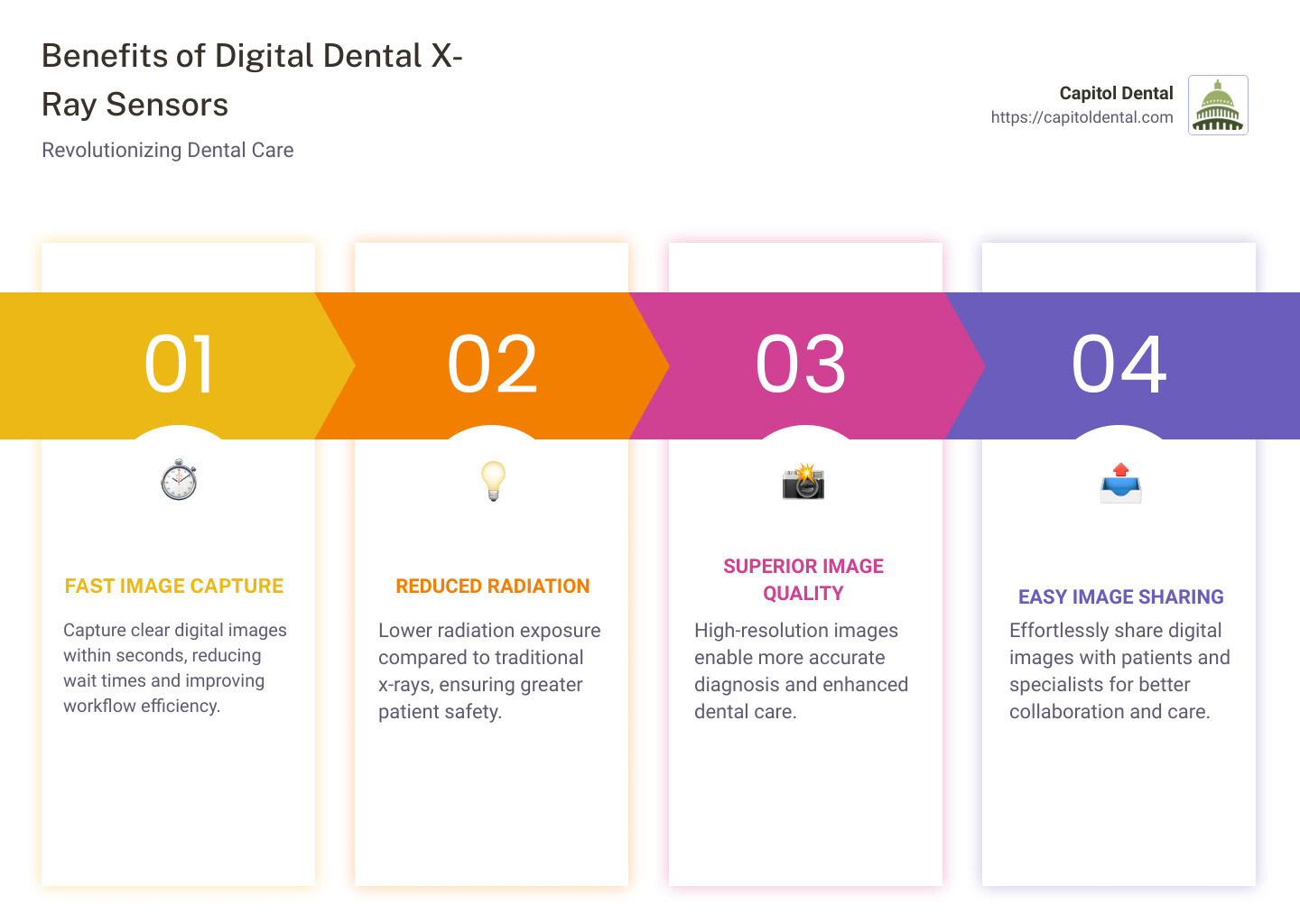
Digital dental x-ray sensors are transforming dental care, elevating the level of patient diagnosis and treatment. These high-tech tools replace traditional film x-rays with swift, clear digital images. This switch delivers numerous benefits including:
- Faster image capture in seconds.
- Reduced patient exposure to radiation.
- Clearer images for better diagnosis.
- Easier sharing of images with patients and specialists.
Digital dental x-ray sensors are not just improving dental technology; they are also enhancing patient care. At Capitol Dental, we are committed to utilizing these innovations to provide you with the best possible dental services.
For more details on how digital sensors can revolutionize your practice and patient care, explore our comprehensive article below.
Understanding Digital Dental X-Ray Sensors
Technology
Digital dental x-ray sensors are a modern leap from traditional film-based X-rays. Instead of film, these sensors use advanced technology like APS CMOS (Active Pixel Sensor Complementary Metal-Oxide-Semiconductor) to capture high-resolution images of your teeth and mouth. These sensors are connected to a computer, which processes and displays the images almost instantly.
There are three main types of sensors used:
- Charge-Coupled Device (CCD): Known for high image quality.
- Complementary Metal-Oxide-Semiconductor (CMOS): Similar to CCD but more power-efficient and cost-effective.
- Phosphor Plate Systems: Flexible plates that capture the image and are later scanned into the computer.
Benefits
Switching to digital dental x-ray sensors offers numerous benefits:
- Faster Results: Images are available within seconds, allowing for immediate diagnosis.
- Reduced Radiation: Up to 80% less radiation compared to traditional film X-rays.
- Enhanced Image Quality: Higher resolution images help in better diagnosis.
- Improved Patient Comfort: More comfortable sensors compared to bulky film.
- Eco-Friendly: No need for chemical processing, reducing environmental impact.
Digital vs Traditional
Traditional film X-rays have been the standard since Wilhelm Röntgen discovered X-rays in 1895. However, they come with several drawbacks:
- Longer Processing Time: Film X-rays require time to develop.
- Higher Radiation Exposure: More radiation is needed to capture the image.
- Chemical Waste: Film processing involves chemicals that are harmful to the environment.
- Storage Issues: Physical films take up space and are harder to share.
In contrast, digital dental x-ray sensors offer:
- Instant Images: No waiting time for film development.
- Lower Radiation: Safer for patients.
- Digital Storage: Easy to store, retrieve, and share images.
- Better Diagnostics: Clearer images lead to more accurate diagnoses.
By adopting digital sensors, dental practices can provide quicker, safer, and more accurate care to their patients. This technology is not just a step up; it’s a game-changer in dental diagnostics.
Transitioning from film to digital is a significant move, but the benefits for both patients and practitioners are well worth it. Up next, we’ll delve into the key features that make these sensors stand out in the market.
Key Features of Top Digital Dental X-Ray Sensors
When choosing a digital dental x-ray sensor for your practice, it’s important to look at several key features. These features ensure you get the most out of your investment and provide the best care to your patients. Let’s break down the essentials:
Resolution
High resolution is crucial for clear, detailed images. Top sensors offer impressive line pairs per millimeter (LP/mm), which is a measure of image clarity. For example, the DentiMax Dream Sensor boasts a theoretical resolution of 26.3 LP/mm, allowing dentists to detect even the smallest cavities and abnormalities.
Sensor Size
Different patients require different sensor sizes for comfort and accuracy. Most sensors come in multiple sizes to fit adults, children, and special cases. For instance, the RVG 6100 offers various sizes, making it versatile for any dental practice.
Connectivity
Easy and reliable connectivity is a must. Many top sensors use USB connections for quick data transfer. The DEXIS FS Ergo supports both USB 2.0 and USB 3.0, ensuring fast and efficient image uploads. This minimizes downtime and keeps the workflow smooth.
Software Compatibility
A good digital dental x-ray sensor should seamlessly integrate with your existing software. Compatibility ensures that images can be easily stored, accessed, and shared. For example, DentiMax sensors work well with various dental practice management systems, making it easier to handle patient records and insurance claims.

Summary Table
| Feature | Example Product | Key Specification |
|---|---|---|
| Resolution | DentiMax Dream Sensor | 26.3 LP/mm |
| Sensor Size | RVG 6100 | Multiple sizes available |
| Connectivity | DEXIS FS Ergo | USB 2.0 and USB 3.0 |
| Software Compatibility | DentiMax | Integrates with various practice management systems |
Selecting the right sensor involves considering these features to ensure you get the best performance and value. Each feature plays a vital role in enhancing diagnostic accuracy and patient comfort.
Next, we’ll explore how these sensors enhance diagnostic accuracy and why they are a must-have for modern dental practices.
How Digital Dental X-Ray Sensors Enhance Diagnostic Accuracy
Image Clarity
Digital dental X-ray sensors provide high-resolution images that make a world of difference in diagnostics. Unlike traditional film X-rays, which offer fixed quality images, digital sensors allow dentists to zoom in, adjust brightness, and enhance contrast. This leads to better detection of cavities, bone loss, and infections.
For example, with a true resolution of 20lp/mm, these sensors can capture even the smallest details, making it easier to spot issues early on.
Reduced Radiation
One of the most significant advantages of digital dental X-ray sensors is the reduced radiation exposure. Digital X-rays use up to 90% less radiation compared to traditional methods. This is crucial for patient safety, especially for children and pregnant women. Lower radiation levels mean safer procedures without compromising image quality.
Instant Results
Digital sensors provide instant results, eliminating the waiting time associated with film development. This quick turnaround not only improves patient experience but also allows for faster diagnosis and treatment planning. Immediate feedback means less time in the chair and quicker adjustments if a retake is necessary.
Real-World Impact
Consider a dental practice that switched to digital sensors from traditional film X-rays. The practice reported a significant improvement in diagnostic accuracy and patient turnaround time. Patients appreciated the reduced radiation exposure and the ability to see their X-rays instantly on a screen. This led to better patient satisfaction and more efficient workflows.
By enhancing image clarity, reducing radiation, and providing instant results, digital dental X-ray sensors are revolutionizing dental diagnostics. They offer a safer, faster, and more accurate way to diagnose and treat oral health conditions.
Next, let’s dive into the cost analysis of digital dental X-ray sensors and understand the financial implications for your practice.
Cost Analysis of Digital Dental X-Ray Sensors
Initial Investment
Digital dental X-ray sensors come with a higher upfront cost compared to traditional film-based systems. Prices can range from $900 to $4,100 per sensor, depending on the brand and features. For example, the DEXIS FS Ergo is priced at the higher end due to its advanced technology and custom holders.
However, this initial investment includes not just the sensor, but often software for image processing, storage solutions, and sometimes even training for your staff.
Long-Term Savings
While the initial cost is higher, the long-term savings can be substantial. Traditional X-ray systems require ongoing purchases of film, chemicals for developing, and disposal costs for hazardous waste. Digital systems eliminate these recurring expenses.
Digital X-rays also speed up the diagnosis process. This can increase the number of patients you can see in a day, boosting your practice’s revenue. According to Canon Medical Systems, digital radiography can save a hospital processing 20,000 X-rays annually up to $240,000.
Maintenance Costs
Maintenance for digital dental X-ray sensors is generally lower than for traditional systems. There’s no need for chemical processing equipment, which can break down and require costly repairs. Most digital sensors are built to be durable; for instance, many are waterproof (IP68), reducing the risk of damage from spills or cleaning.
However, it’s important to factor in software updates and potential replacements for worn-out sensors over time. Regular software updates ensure that your system remains compatible with new technologies and maintains optimal performance.
Overall Financial Implications
Switching to digital X-ray sensors involves a higher initial cost but offers significant long-term savings and operational efficiencies. The reduction in film and chemical costs, combined with increased patient throughput, makes digital sensors a financially sound investment for most dental practices.
Next, we’ll answer some frequently asked questions about digital dental X-ray sensors to help you make an informed decision.
Frequently Asked Questions about Digital Dental X-Ray Sensors
What are digital dental x-ray sensors?
Digital dental X-ray sensors are advanced tools used to capture detailed images of your teeth and mouth. Unlike traditional film X-rays, these sensors use digital technology to produce high-resolution images quickly.
There are two main types of digital dental X-ray sensors:
- Charge-Coupled Device (CCD): Known for high image quality, CCD sensors have been around the longest.
- Complementary Metal-Oxide-Semiconductor (CMOS): These sensors are similar to CCD but consume less power and are often more affordable.
Why are digital x-ray sensors preferred over traditional methods?
Speed: Digital sensors capture images almost instantly. No more waiting for film to develop. This means quicker diagnoses and less time in the dental chair for patients.
Image Quality: Digital sensors provide clearer, more detailed images. This helps dentists to identify issues more accurately.
Radiation Levels: Digital X-rays expose patients to up to 80% less radiation compared to traditional film X-rays. This makes them a safer choice for both patients and dental staff.
How can dental practices manage the high cost of digital x-ray sensors?
Financing Options: Many suppliers offer financing plans to help spread the cost over time. This makes the initial investment more manageable.
Return on Investment (ROI): Despite the upfront cost, digital X-ray sensors can save money in the long run. They reduce the need for film, chemicals, and storage space. Plus, quicker image processing means you can see more patients in a day.
Cost-Benefit Analysis: It’s essential to weigh the initial costs against the long-term benefits. The savings on materials and the increased efficiency can make digital sensors a financially sound decision. For example, a hospital that processes 20,000 X-rays annually could save $240,000 a year by switching to digital systems.
Next, we’ll explore how to integrate digital X-ray sensors into your dental practice seamlessly.
Integrating Digital X-Ray Sensors into Your Practice
Installation
Setting up digital dental X-ray sensors is simpler than you might think. Most sensors connect via USB, making them plug-and-play. Ensure your computer systems meet the software requirements. This avoids compatibility issues.
Tip: Have a professional install the sensors to avoid any technical glitches. Proper setup can save you from future headaches.
Training
Your team needs to know how to use the new equipment. Schedule training sessions with the sensor manufacturer. They often provide detailed tutorials and hands-on training.
Example: DEXIS offers custom holders with their sensors and provides training on how to use them. This ensures your staff is comfortable with the equipment.
Workflow Integration
Integrating digital sensors into your workflow can boost efficiency. Start by updating your patient intake process to include digital imaging. Train your staff to use the new software for scheduling and image retrieval.
Step-by-Step:
1. Update Intake Forms: Include consent for digital X-rays.
2. Train Staff: Use software for image storage and retrieval.
3. Streamline Workflow: Incorporate digital imaging into regular check-ups and treatments.
Fact: Digital sensors reduce radiation exposure by up to 90%. This makes them safer for patients and staff.
Continuous Improvement
Regularly review your digital X-ray technique. Stay open to feedback from your team. This commitment to excellence will ensure you get the most out of your investment.
Quote: “Continuous improvement is key. Regularly review your technique and stay open to feedback,” advises Capitol Dental.
By following these steps, you can seamlessly integrate digital dental X-ray sensors into your practice, improving both efficiency and patient care.
Next, we’ll answer some frequently asked questions about digital dental X-ray sensors.
Conclusion
At Capitol Dental, we are committed to providing comprehensive dental services using the latest advancements in technology. Our investment in digital dental X-ray sensors is a testament to this commitment. These state-of-the-art sensors enhance diagnostic accuracy, reduce radiation exposure, and improve overall patient experience.
Advanced Technology for Better Care
We leverage cutting-edge tools like 3D Cone Beam Computed Tomography (CBCT) and intraoral scanners to offer precise and comfortable diagnostic experiences. These technologies allow us to capture detailed images of your teeth and jaw, which is crucial for complex procedures like dental implants and orthodontics.
Comprehensive Services
Our services go beyond just diagnostics. We offer a full range of dental care options, from routine check-ups to advanced cosmetic procedures. By integrating advanced technologies into our practice, we ensure that our patients receive the best possible care.
Why Choose Capitol Dental?
Choosing us means opting for a dental practice that prioritizes both innovation and patient comfort. We stay ahead of industry trends to provide you with top-notch care. Our team is always ready to guide you through the latest advancements in dental technology, ensuring you benefit from the best practices in the field.
Visit our Boise General Dentistry page to learn more about our services and how we can help you achieve optimal oral health.
At Capitol Dental, your smile is our top priority. Let’s make it shine with the best in digital dental technology.
By choosing Capitol Dental, you are choosing a future-ready dental practice committed to excellence and patient care.