



Does Oral Sedation Dentistry Work? Top 5 Benefits in 2024
Easing Dental Anxiety with Oral Sedation Dentistry
Does oral sedation dentistry work? In short, yes. Oral sedation is highly effective in reducing dental anxiety, ensuring a more comfortable experience during dental procedures.
Here’s what you need to know:
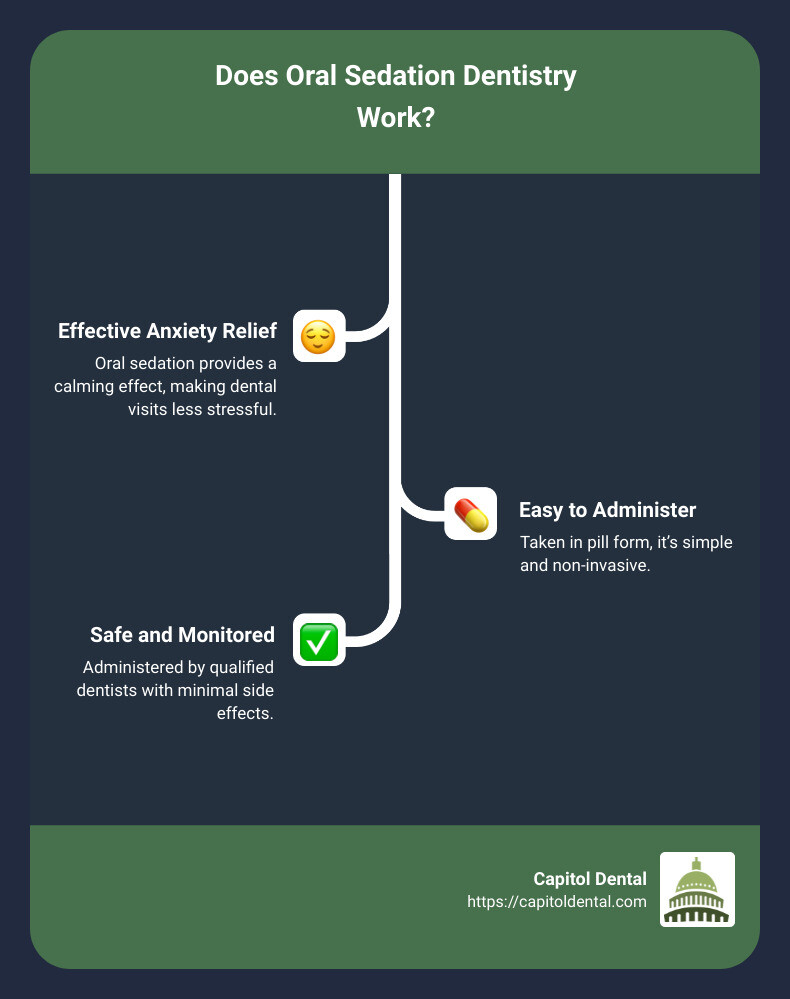
- Effective anxiety relief: Oral sedation provides a calming effect, making dental visits less stressful.
- Easy to administer: Taken in pill form, it’s simple and non-invasive.
- Safe and monitored: Administered by qualified dentists with minimal side effects.
Millions of people experience dental anxiety. This fear can prevent them from getting the dental care they need. At Capitol Dental, we understand these concerns and provide sedation options to help. Oral sedation dentistry can make your dental visits relaxed and stress-free.
I am Dr. Ryan Doyle, DDS, with years of experience in sedation dentistry. My team and I specialize in making dental care accessible and comfortable, even for the most anxious patients.
Stay tuned to learn more about how oral sedation works and the benefits it offers.
What is Oral Sedation Dentistry?
Oral sedation dentistry, also known as pill sedation, is a method used to help patients relax during dental procedures. This type of sedation involves taking a pill, usually a benzodiazepine, before your appointment. Benzodiazepines, such as Valium, Halcion, and Xanax, work by decreasing activity in the parts of the brain that control fear and anxiety.
How It Works
When you take an oral sedative, it slows down your brain activity, making you feel calm and relaxed. This is especially helpful for people who have dental anxiety or fear of dental procedures.
Fear and Anxiety Reduction
For many patients, the thought of visiting the dentist can be overwhelming. Oral sedation helps to reduce this anxiety, making the entire experience more manageable. By the time you arrive at the dental office, the medication will have taken effect, and you’ll feel more at ease.
Pill Sedation
Taking a pill is straightforward and non-invasive. Your dentist will prescribe the appropriate medication and dosage based on your medical history and the procedure you’re undergoing. You’ll take the pill about an hour before your appointment, allowing enough time for it to kick in.

Benzodiazepines
These medications are well-known for their effectiveness in reducing anxiety. They are FDA-regulated, ensuring that they are safe for use in dental procedures. Benzodiazepines not only help you relax but also have an amnesic effect, meaning you might not remember much about the procedure afterward.
Key Points:
- Ease of Administration: Just take a pill before your appointment.
- No Needles: Ideal for patients afraid of needles.
- Safe and Regulated: FDA-approved medications.
- Effective Anxiety Reduction: Helps you stay calm and relaxed.
Oral sedation dentistry is a valuable option for those who experience fear and anxiety about dental visits. It makes the process smoother and more comfortable for both the patient and the dental professional.
Next, we’ll dive into the specifics of how oral sedation dentistry works and what you can expect.
How Does Oral Sedation Dentistry Work?
Oral sedation dentistry might sound complex, but it’s pretty straightforward. The main goal is to help you relax and reduce anxiety during dental procedures. Here’s how it works:
Brain Activity Reduction
Oral sedation uses medications, usually from the benzodiazepine family, to slow down brain activity. This doesn’t mean your brain stops working; it just means it operates at a calmer pace. Think of it as turning down the volume on a noisy radio. This reduction in brain activity helps you feel less anxious and more at ease.
Relaxation
The primary purpose of oral sedation is to help you relax. When you take the medication, it takes effect within 30 minutes to an hour. You’ll start to feel a wave of calmness wash over you. This relaxed state makes it easier for you to sit through dental procedures without feeling stressed or anxious.
Drowsiness
One of the common effects of oral sedation is drowsiness. While you won’t be fully asleep, you’ll feel very sleepy. This drowsiness helps you stay relaxed and minimizes your awareness of the procedure. Most people describe it as being in a twilight state, where you’re not fully awake but not completely asleep either.
Amnesia Effect
Another benefit of oral sedation is its amnesia effect. Many patients report not remembering much of the procedure afterward. This can be particularly helpful for those with severe dental anxiety. The amnesia effect ensures that any discomfort or stress during the procedure isn’t something you’ll recall later.
By reducing brain activity, promoting relaxation, inducing drowsiness, and causing temporary amnesia, oral sedation dentistry effectively helps manage dental anxiety. This makes it easier for patients to undergo necessary dental treatments without fear or stress.
Next, we’ll explore the advantages of oral sedation dentistry in more detail.
Advantages of Oral Sedation Dentistry
Oral sedation dentistry offers several benefits that make it a popular choice for managing dental anxiety. Let’s break them down:
Easy to Administer
One of the biggest advantages is how simple it is to use. Oral sedation is typically given in pill form, which you take before your dental appointment. There are no complicated procedures or equipment needed. This makes it accessible and straightforward for both patients and dental professionals.
No Needles
For those who have a fear of needles, oral sedation is a great option. Since the medication is taken orally, you can avoid the stress and discomfort associated with injections. This is especially beneficial for individuals who might otherwise avoid dental care due to needle phobia.
Safe
Oral sedation is considered very safe when administered by a trained dental professional. Your dentist will review your medical history to ensure that the medication is appropriate for you. The drugs used, such as triazolam (Halcion®) and lorazepam, are well-researched and regulated by the FDA, ensuring their safety and effectiveness.
Responsive
Even though you’ll feel relaxed and drowsy, you will remain awake and responsive during the procedure. This means you can still communicate with your dentist if needed. If you doze off, you’ll be able to wake up easily. This level of awareness helps in maintaining a level of control while still reducing anxiety.
Amnesia Effect
One of the unique benefits of oral sedation is the amnesia effect. Patients often don’t remember much, if any, of the procedure afterward. This can be particularly helpful for those with severe dental anxiety. The amnesia effect ensures that any discomfort or stress during the procedure isn’t something you’ll recall later.
Non-Invasive
Oral sedation is a non-invasive method to manage anxiety. Unlike IV sedation or general anesthesia, it doesn’t require any special equipment or invasive techniques. This makes it a less intimidating option for many patients, contributing to a more comfortable dental experience.
These advantages make oral sedation a compelling option for anyone dealing with dental anxiety. Next, we’ll discuss some of the disadvantages to give you a well-rounded view.
Disadvantages of Oral Sedation Dentistry
While oral sedation has many benefits, it also comes with some disadvantages. It’s important to be aware of these so you can make an informed decision.
Not Immediately Effective
One of the main drawbacks of oral sedation is that it doesn’t work immediately. Since the medication has to be absorbed through the digestive system, it can take 30 minutes to an hour to feel the effects. Your dentist will give you specific instructions on when to take the pill before your appointment to ensure it kicks in on time.
Dosage Adjustment
Adjusting the dosage of oral sedation can be tricky. Once you’ve taken the pill, the dentist can’t easily increase or decrease the dosage during the procedure. This is unlike IV sedation, where the dosage can be adjusted in real-time. Because everyone’s body reacts differently to medication, finding the right dose can be a bit of a guessing game.
Can’t Drive
Another disadvantage is that you can’t drive yourself home after the procedure. The sedative effects can last several hours, impairing your ability to operate a vehicle safely. You’ll need to arrange for a friend or family member to drive you to and from your appointment. It’s important to plan for this in advance to avoid any complications.
Potential Side Effects
Although oral sedation is generally safe, it can have some potential side effects. These may include:
- Dry mouth
- Nausea
- Headaches
- Prolonged drowsiness
In rare cases, some people may experience allergic reactions to the medication. Your dentist will review your medical history to minimize these risks, but it’s still something to consider.
Understanding these disadvantages can help you weigh the pros and cons of oral sedation. Next, we’ll discuss the overall safety of oral sedation dentistry.
Is Oral Sedation Dentistry Safe?
When it comes to safety, oral sedation dentistry is highly regulated and monitored. Here’s why you can feel confident about its safety:
FDA Regulation
Oral sedation medications are approved by the FDA (Food and Drug Administration). This means they have undergone rigorous testing for safety and effectiveness. Common medications like triazolam (Halcion®) and lorazepam are well-studied and widely used in both dental and medical settings.
Dentist Monitoring
During the procedure, your dentist will closely monitor your vital signs. This includes your heart rate, breathing, and blood pressure. Following the American Dental Association’s guidelines, they will have oxygen and drugs that reverse sedation effects on hand, just in case.
Minimal Side Effects
Although there are potential side effects like dry mouth, nausea, and prolonged drowsiness, these are generally mild and temporary. Serious complications are rare, especially when the procedure is performed by a trained professional. Overdoses during dental sedations are far less than 1 percent, according to Dr. Joel Weaver from the American Dental Society of Anesthesiology.
Medical History Review
Before administering oral sedation, your dentist will conduct a thorough review of your medical history. This helps identify any potential risks or contraindications, such as allergies or interactions with current medications. Ensuring you are an appropriate candidate for sedation minimizes the risk of complications.
By following these safety measures, oral sedation dentistry can be a safe and effective option for managing dental anxiety. Next, let’s explore how well this method works to ease dental anxiety.
Does Oral Sedation Dentistry Work for Dental Anxiety?
Yes, oral sedation dentistry does work for dental anxiety. It has proven to be highly effective in helping patients feel calm and comfortable during dental procedures. Here’s how it works and why it can be a game-changer for those who fear the dentist.
Effectiveness
Oral sedation dentistry uses medication to reduce brain activity, leading to a relaxed state. Patients often feel drowsy and less aware of the procedure, which helps in reducing anxiety significantly. According to Capitol Dental, sedation can help control pain and discomfort, making the overall experience less stressful.
Patient Testimonials
Many patients have shared positive experiences with oral sedation. For example, Sarah, a patient at Capitol Dental, said:
“I was terrified of dental work. Oral sedation made my experience so much better. I didn’t feel any pain, and I was so relaxed that the procedure was over before I knew it.”
Such testimonials highlight the real-life benefits and effectiveness of oral sedation in managing dental anxiety.
Sedation Levels
Oral sedation can be adjusted to different levels depending on the patient’s needs. It ranges from minimal sedation, where you’re awake but relaxed, to moderate sedation, where you may not remember much of the procedure. This flexibility allows dentists to tailor the sedation to each patient’s anxiety level and the complexity of the procedure.
Comfort During Procedures
One of the biggest advantages of oral sedation is the comfort it provides. Patients often report feeling as if they slept through the procedure. This is particularly helpful for those who have a strong fear of needles or the sounds of dental instruments. The relaxed state reduces the likelihood of gagging and makes it easier for the dentist to perform the necessary work.
In summary, oral sedation dentistry is not just effective; it’s a lifeline for those struggling with dental anxiety. By providing a relaxed and comfortable experience, it enables patients to receive the dental care they need without the associated stress and fear.
Next, let’s delve into some frequently asked questions about oral sedation dentistry.
Frequently Asked Questions about Oral Sedation Dentistry
Do you feel pain with oral sedation?
With oral sedation, you will feel relaxed and comfortable. Most patients report feeling no pain during the procedure. This is because your dentist will also use local anesthesia to numb your teeth and gums. The combination of oral sedation and local anesthesia ensures that you won’t feel any discomfort during your dental work.
How long does oral sedation last?
The effects of oral sedation can vary, but typically, the medication takes about 30 to 60 minutes to kick in. The sedation can last for several hours, depending on the dosage and your body’s response. You will likely feel drowsy and relaxed during the procedure and for a few hours afterward. Full recovery usually takes about 24 hours, during which you should avoid driving or operating heavy machinery.
What should you expect during oral sedation?
Pre-procedure: Your dentist will provide you with detailed instructions on when to take the sedative, usually about an hour before your appointment. It’s important to follow these instructions closely for the medication to be effective. You should also arrange for someone to drive you to and from your appointment.
During the procedure: Once the sedative takes effect, you’ll feel very relaxed and possibly a bit sleepy. You’ll still be awake and able to respond to your dentist’s instructions, but you might not remember much of the procedure afterward. The dentist will administer local anesthesia to ensure you feel no pain during the treatment.
Post-procedure: After the procedure, you’ll likely feel groggy and will need someone to drive you home. It’s recommended that you rest for the remainder of the day. The sedative’s effects should wear off within 24 hours, and you can resume your normal activities the following day.
Oral sedation dentistry offers a safe and effective way to manage dental anxiety, making it easier for patients to undergo necessary dental treatments comfortably. By understanding what to expect before, during, and after the procedure, you can approach your dental appointment with confidence and peace of mind.
Next, let’s explore the comprehensive care and advanced sedation options provided by Capitol Dental.
Conclusion
At Capitol Dental, we understand that dental anxiety is a significant barrier for many people when it comes to getting the care they need. That’s why we’re committed to transforming your dental visits into positive, stress-free experiences.
Comprehensive Care
Our services cover all aspects of dental health. From routine check-ups and cleanings to more complex procedures like root canals and implants, we ensure every base is covered. Our team is dedicated to providing you with the highest quality of care tailored to your unique needs.
Advanced Sedation Options
We offer a range of advanced sedation options to help you feel at ease during your visit. Whether you need nitrous oxide, oral sedation, or IV sedation, we have the right solution for you. Our sedation dentistry options are designed to make your dental treatments as comfortable and pain-free as possible.
Personalized Service
At Capitol Dental, we believe in personalized care. We take the time to understand your concerns, preferences, and health needs. This personalized approach helps us craft a care plan that aligns with your dental and personal comfort needs. Our friendly staff ensures that you feel valued and respected from the moment you step into our office.
By choosing Capitol Dental, you’re not just getting a dentist; you’re partnering with a team that cares deeply about your oral health and overall well-being.
Ready to experience stress-free dental care? Explore our sedation dentistry services and schedule your next visit today.
Together, let’s make your dental health journey a positive and fulfilling one, free from fear and full of smiles.