



3D Printed Crowns: Top 5 Benefits in 2024
Introduction
3D printed crowns are changing the game in dentistry. These innovative dental crowns are made using advanced 3D printing technology, which offers several benefits over traditional crowns.
Want a quick summary? Here it is:
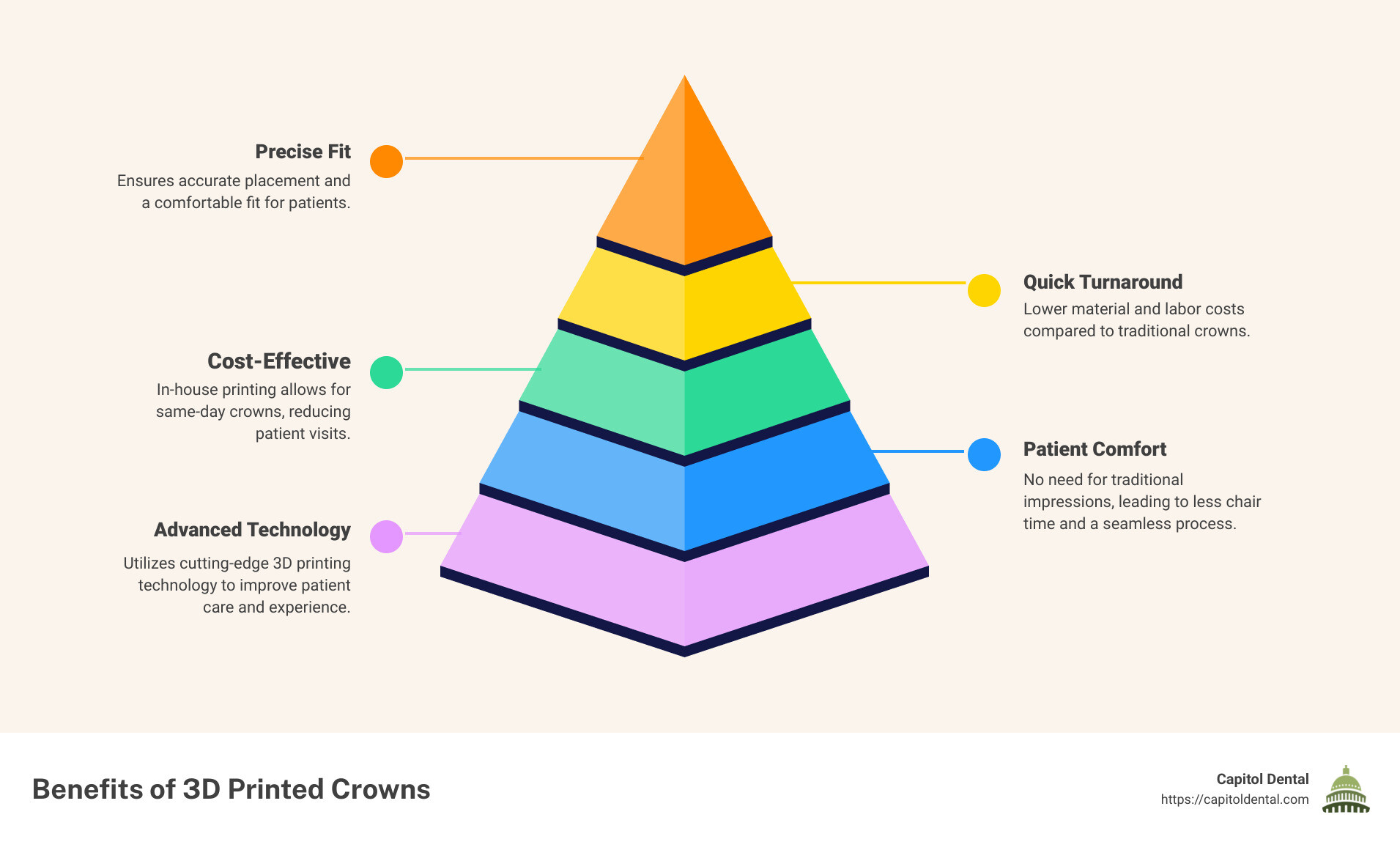
- Cost-effective
- Quick turnaround
- Precise fit
- Patient comfort
The dental industry has seen monumental advancements over the years, and one of the most exciting is the rise of 3D printing. This technology is not just a futuristic concept; it’s here and ready to transform your dental experience. At Capitol Dental, we are committed to utilizing cutting-edge technology to improve patient care.
If you’ve ever felt anxious or uncomfortable during dental procedures, 3D printing can make your visits much smoother. Imagine getting a custom crown printed and fitted in just one appointment, with higher precision and less discomfort. Sounds great, right?
What are 3D Printed Crowns?
3D printed crowns are dental prosthetics made using advanced 3D printing technology. They offer a modern alternative to traditional crowns, which are often made from materials like zirconia or porcelain and require multiple visits to the dentist.
Materials Used in 3D Printed Crowns
3D printed crowns are typically made from composite resin or ceramic-filled resin. These materials are chosen for their biocompatibility, meaning they are safe to use in the human body without causing allergic reactions or other issues.
- Composite Resin: This is a strong and durable material, but it is not as robust as traditional options like zirconia or eMax. Composite resin can be a great choice for temporary crowns.
- Ceramic-Filled Resin: This material combines the aesthetic qualities of ceramic with the flexibility of resin, making it a good option for more permanent solutions.
How 3D Printed Crowns are Made
The process of making a 3D printed crown involves several steps, each designed to ensure a precise and comfortable fit.
- Intraoral Scan: The dentist uses a digital scanner to capture a detailed 3D image of your teeth. This is much more comfortable than traditional methods that use messy impression materials.
- CAD Software: The scanned image is then uploaded to a computer-aided design (CAD) software. This software helps the dentist design a custom crown that fits perfectly over your prepared tooth.
- 3D Printing: The design is sent to a 3D printer, which builds the crown layer by layer using composite or ceramic-filled resin. This process is highly accurate, ensuring a snug fit and natural appearance.
- Post-Processing: Once printed, the crown undergoes a series of finishing steps. It is cleaned, inspected, and cured to ensure it is ready for placement in your mouth.
Using these advanced techniques, 3D printed crowns can be produced quickly and cost-effectively, providing a convenient solution for both patients and dental practitioners.
Next, we will delve into the benefits of 3D printed crowns, highlighting why they are becoming a popular choice in modern dentistry.
Benefits of 3D Printed Crowns
Cost-Effectiveness
One of the standout benefits of 3D printed crowns is their cost-effectiveness. Traditional crowns, especially those made from materials like zirconia or eMax, can be quite expensive due to the labor-intensive milling process. In contrast, 3D printed crowns are made from composite resin, which is cheaper and easier to work with.
Material Cost: Using composite resin significantly reduces the material cost compared to traditional options.
Labor Cost: The labor involved in 3D printing is also less intensive, as much of the process is automated. This translates to lower overall costs for dental practices and, ultimately, for patients. According to SprintRay, 3D printing crowns can save dental practices on lab bills, making high-quality dental care more accessible.
Quick Turnaround Time
3D printed crowns offer a much quicker turnaround time compared to traditional crowns.
In-House Printing: Dentists can print crowns right in their office, eliminating the need to send impressions to an external lab. This can cut down the production time from weeks to mere hours.
Same-Day Crowns: Because the process is so fast, many patients can get their crowns on the same day as their initial appointment. This reduces the number of visits, saving time for both the patient and the dental practice.
Precision and Fit
Digital Impressions: The process starts with a digital impression of the patient’s mouth, which is far more accurate than traditional molds. This ensures a better fit for the crown.
AI Design: Advanced AI software is used to design the crown, ensuring it matches the patient’s existing teeth perfectly. This level of precision means that 3D printed crowns often fit better than their traditional counterparts.
Accuracy: The 3D printing process itself is highly accurate, capable of producing crowns with intricate details that match the natural contours of the patient’s teeth.
Patient Comfort
No Impressions: One of the most uncomfortable parts of getting a traditional crown is the impression process. With 3D printed crowns, digital scans replace messy and often uncomfortable physical impressions.
Less Chair Time: The quicker turnaround time means less time spent in the dentist’s chair. This is particularly beneficial for patients who experience anxiety during dental procedures.
Seamless Process: The entire process, from scanning to printing to fitting, is streamlined and efficient. This not only enhances patient comfort but also improves the overall experience.
These benefits make 3D printed crowns an appealing option for both patients and dental practitioners. Next, we will explore the strength and durability of these crowns, addressing common concerns and highlighting future advancements in the field.
Strength and Durability of 3D Printed Crowns
Current Limitations
While 3D printed crowns offer many advantages, there are some limitations to consider.
Wear and Tear: Dr. Austin Vetter noted that certain FDA-approved materials used for 3D printed crowns showed noticeable wear over time. These materials were not robust enough to withstand the posterior forces, meaning they wore down faster when used on back teeth.
Temporary Use: Due to the current limitations in material strength, 3D printed crowns are often recommended as interim prosthetics. They serve as cost-effective placeholders but may need replacement sooner than traditional crowns.
Posterior Forces: The back teeth experience significant chewing forces, making it challenging for current 3D printed materials to endure long-term. This is why many dentists, including Dr. Vetter, are cautious about using them in the posterior region.
Future Advancements
Despite these limitations, the future of 3D printed crowns looks promising with ongoing advancements.
New Materials: Innovations in resin technology are on the horizon. Dr. Vetter is optimistic about upcoming materials that will better resist wear and tear. For instance, ceramic-filled printable materials are showing great potential in improving durability.
Ceramic-Dominant Resins: Companies like Lithoz are developing new ceramic-dominant resins, such as lithium disilicate, which offer higher strength and aesthetic quality. These materials could bring 3D printed crowns closer to the durability of traditional options like zirconia and eMax.
FDA Approvals: Recent FDA approvals for materials like Flexcera Smile Ultra+ resin are paving the way for more durable and reliable 3D printed crowns. These advancements could soon make same-day permanent crowns a reality, as shown by Desktop Health’s new 3D printer capabilities.
Interim Prosthetics: For now, 3D printed crowns are a solid option for interim prosthetics. They provide a quick, cost-effective solution while patients wait for more permanent restorations. As materials improve, these crowns will likely become more viable for long-term use.
These advancements are set to address the current limitations of 3D printed crowns, making them a more durable and reliable option in the near future. Next, we will explore the aesthetic quality of these crowns, focusing on personalization and color matching.
Aesthetic Quality of 3D Printed Crowns
Personalization and Precision
One of the standout features of 3D printed crowns is their high level of personalization and precision. Thanks to digital impressions and CAD software, each crown is designed to fit the unique contours of a patient’s mouth. This ensures a near-perfect fit, offering comfort and functionality that closely mimics natural teeth.
The precision of 3D printing technology means that the shape and design of the crown can be tailored to the individual. This level of customization is hard to achieve with traditional methods, making 3D printed crowns a promising option for those seeking a personalized dental solution.
Staining and Color Limitations
However, the aesthetic quality of 3D printed crowns does come with some trade-offs. One major limitation is the color. Currently, 3D printers can only produce crowns in a single shade at a time. This means the crowns often appear monochromatic and lack the natural translucency and color variations found in real teeth.
To address this, a staining process is used to try and match the crown to the surrounding teeth. But this process can leave the crowns looking opaque and less natural compared to traditional materials like ceramic or zirconia. The staining also adds an extra step to the process, which can slightly offset the time saved in printing.
These aesthetic trade-offs are significant, especially for crowns placed on front teeth where appearance is crucial. While the precision and fit are excellent, the color limitations make them less ideal for highly visible areas.
Next, we will look at whether 3D printed crowns are a good option for you, considering factors like temporary vs permanent use and cost-benefit analysis.
Should You Consider 3D Printed Crowns?
Temporary vs Permanent Crowns
When deciding whether to go for a 3D printed crown, understand the difference between temporary and permanent crowns.
Temporary Crowns: These are ideal for short-term use. They provide a quick solution while waiting for a more durable option like zirconia or metal crowns. Temporary crowns made from materials like composite resin can last a few months to a year, making them suitable for interim use.
Permanent Crowns: Currently, most 3D printed crowns are not as durable as traditional milled crowns. While advancements are being made, they may not yet match the longevity and strength of materials like zirconia, which can last over five years. For long-term solutions, milled crowns remain the gold standard.
Cost-Benefit Analysis
Affordability: One of the significant advantages of 3D printed crowns is cost-effectiveness. The materials and labor involved are generally less expensive than those required for milled crowns. This can make 3D printed crowns an attractive option for both dental practices and patients.
ROI for Practices: For dental practices, investing in 3D printing technology can offer a substantial return on investment. By reducing lab bills and speeding up treatment times, practices can see increased efficiency and profitability. According to SprintRay, using 3D printing can save significant costs compared to outsourcing production.
Practice Efficiency: 3D printing crowns in-house can streamline workflows. With the ability to produce crowns on the same day, patient visits are reduced, and the overall treatment process becomes more efficient. This not only saves time but also enhances patient satisfaction.
Patient Suitability
Oral Hygiene: Patients with excellent oral hygiene are better candidates for 3D printed crowns. Proper care can extend the life of these crowns, making them a viable option for many.
Posterior vs Anterior Use: 3D printed crowns are currently more suitable for anterior (front) teeth rather than posterior (back) teeth. The aesthetic quality and lower durability make them less ideal for molars, which endure more biting forces.
Patient Preferences: Some patients may prefer the quick turnaround and lower cost of 3D printed crowns. However, those prioritizing long-term durability and aesthetics, especially for visible teeth, might opt for traditional crowns.
By understanding these factors, you can make an informed decision about whether 3D printed crowns are right for you. Next, let’s dive into some frequently asked questions to further clarify any remaining doubts.
Frequently Asked Questions about 3D Printed Crowns
Are 3D Printed Crowns Good?
Durability: 3D printed crowns are a good temporary solution but may not be as durable as traditional milled crowns like zirconia or eMax. They can last up to five years but are more prone to wear and tear, especially in areas with high biting forces.
Material Quality: The quality of materials used in 3D printed crowns has improved. Modern resins, like Permanent Crown Resin, offer high strength and biocompatibility. However, they still fall short compared to ceramic or metal crowns in terms of long-term durability.
Patient Satisfaction: Many patients appreciate the convenience of same-day crowns and the comfort of avoiding traditional impressions. However, some may find the aesthetics and durability of 3D printed crowns lacking compared to traditional options.
How Much Does a 3D Printed Crown Cost?
Cost Comparison: 3D printed crowns are generally more affordable than traditional crowns. The cost savings come from reduced labor and material expenses. According to research, using SprintRay 3D printing can significantly lower the cost of producing crowns compared to outsourcing to a dental lab.
Material and Labor Costs: The materials for 3D printing, like Permanent Crown Resin, are less expensive than those used for milled crowns. Additionally, the in-house production reduces labor costs associated with external labs.
Affordability: The lower cost makes 3D printed crowns an attractive option for both dental practices and patients. Practices can save on lab bills, and patients benefit from reduced treatment costs.
How Long Do 3D Printed Crowns Last?
Lifespan: On average, 3D printed crowns can last up to five years. This makes them suitable for temporary use but not ideal for long-term solutions. Traditional crowns, such as ceramic or metal, can last 15 years or more with proper care.
Oral Hygiene Impact: The longevity of any dental crown depends on good oral hygiene. Brushing twice daily, flossing, and regular dental check-ups can extend the lifespan of 3D printed crowns.
Interim vs Permanent: While 3D printed crowns are great for interim solutions, they are not yet on par with traditional crowns for permanent use. Future advancements in materials and technology may change this, but for now, they are best used as temporary fixes.
For more detailed information on the process and benefits of 3D printed crowns, explore the other sections of our guide.
Conclusion
At Capitol Dental, we are committed to staying at the forefront of dental technology to provide the best care for our patients. 3D printed crowns represent a significant advancement in dentistry, offering numerous benefits that enhance patient experience and treatment outcomes.
Capitol Dental’s Approach
We have integrated 3D printing technology into our practice to offer faster, more cost-effective, and precise dental solutions. This technology allows us to create crowns, night guards, surgical guides, and more, right in our clinic. Our goal is to make dental care more accessible and efficient for everyone.
The Future of 3D Printing in Dentistry
The future of 3D printing in dentistry is bright. As materials and technologies continue to improve, we expect 3D printed crowns to become even more durable and aesthetically pleasing. Innovations like ceramic-filled printable materials and advancements in AI design software will drive these improvements. Eventually, 3D printed crowns might become the standard for both interim and permanent restorations.
Benefits for Patient Care
The benefits of 3D printed crowns for patient care are substantial:
- Cost-Effective: Lower material and labor costs make these crowns a budget-friendly option.
- Quick Turnaround: In-house printing allows for same-day crowns, reducing the need for multiple visits.
- Precision and Fit: Digital impressions and AI design ensure a near-perfect fit.
- Patient Comfort: No need for uncomfortable impressions and less chair time.
At Capitol Dental, we believe that embracing new technologies like 3D printing is essential for providing high-quality, patient-focused care. We are excited about the potential of 3D printed crowns and look forward to incorporating future advancements into our practice.
For more information on how Capitol Dental can help you with your dental needs, visit our Cosmetic Dentistry page.
Your smile is our priority. Let’s make it the best it can be with the latest in dental technology.