



3D Router for Dental Crowns: Top Benefits & Precision in 2024
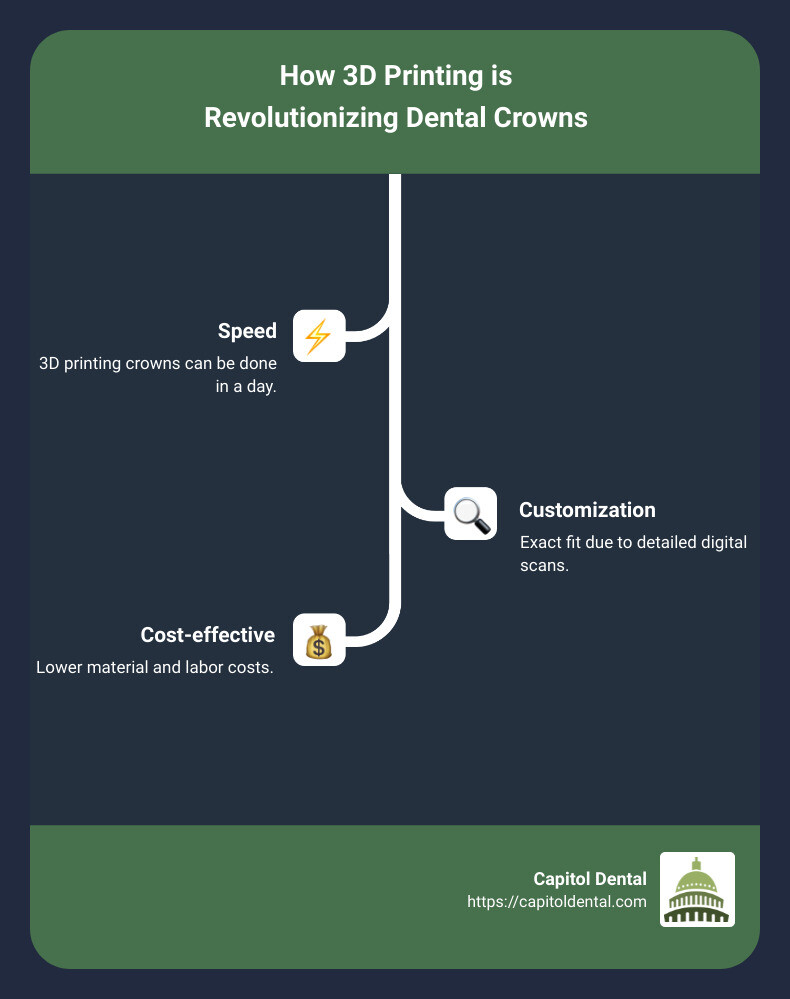
How 3D Printing is Revolutionizing Dental Crowns
3D printing is changing the game in digital dentistry, especially when it comes to dental crowns. With advanced technology, creating precise and durable crowns has never been easier.
Here’s a quick breakdown:
- Speed: 3D printing crowns can be done in a day.
- Customization: Exact fit due to detailed digital scans.
- Cost-effective: Lower material and labor costs.
By comparison, traditional CNC milling methods, while effective, are slower and more labor-intensive.
I’m Dr. Ryan Doyle, DDS, with experience in using 3D printing and CNC milling for dental restorations. This innovation allows for quicker, more tailored dental solutions, improving patient care significantly.
Explore the benefits of 3D routers for dental crowns in the sections that follow.
Understanding 3D Routers for Dental Crowns
What is a 3D Router?
A 3D router is a specialized tool used in digital dentistry to create precise dental restorations like crowns and bridges. It combines CAD/CAM (Computer-Aided Design and Computer-Aided Manufacturing) technology to design and manufacture dental parts with high accuracy.
Traditional methods involve manual processes and physical molds, but 3D routers streamline the workflow. They use digital scans of a patient’s teeth to create a detailed 3D CAD model, which guides the router in shaping the dental crown.
How 3D Routers Work in Dentistry
The process starts with a digital scan of the patient’s mouth using an intraoral scanner. This scan captures a high-resolution image of the teeth, which is then converted into a 3D CAD model. This model serves as a blueprint for the dental crown.
Once the CAD model is ready, the 3D router gets to work. Here’s a step-by-step breakdown:
- Digital Scan:
- The dentist uses an intraoral scanner to capture the exact shape and size of the patient’s tooth.
- CAD Design:
- The digital scan is imported into CAD software, where the dentist or technician designs the crown. The software ensures the crown fits perfectly with the patient’s bite and natural tooth morphology.
- Milling Process:
- The design is then sent to the 3D router, which mills the crown from a block of dental material, often zirconia or advanced dental resins. The router follows the precise measurements from the CAD model, ensuring a high level of accuracy.
- Post-Processing:
- After milling, the crown undergoes minimal post-processing, such as polishing and curing, to enhance its durability and aesthetic appeal.
Using a 3D router for dental crowns not only speeds up the production process but also ensures a better fit and finish compared to traditional methods. The result is a durable, well-fitting crown that can often be completed in a single visit.
Next, we’ll delve into the specific benefits of using 3D routers for dental crowns, including speed, precision, and cost-effectiveness.
Benefits of Using 3D Routers for Dental Crowns
Speed and Efficiency
One of the greatest benefits of using 3D routers for dental crowns is the speed and efficiency they bring to the process. Traditional crown fabrication methods require multiple visits and weeks of waiting. With 3D routers, you can often get same-day crowns, significantly reducing the waiting time.
Case Study: Jamie Kinney shared his experience of getting a crown in just 45 minutes using a 3D router system. This quick turnaround is possible due to the in-house production capabilities of these advanced machines.
Precision and Fit
3D routers offer unparalleled precision, ensuring a perfect fit for dental crowns. The process starts with digital imaging, which creates a highly accurate 3D model of the patient’s tooth. This model guides the router to mill the crown with exact specifications.
Quote: Dr. Ali Saeghi mentions, “Ceramic crowns are beyond natural looking and can be matched to your own surrounding teeth precisely, to the shade.”
This level of accuracy means minimal adjustments are needed once the crown is fitted, enhancing patient comfort and satisfaction.
Cost-Effectiveness
Using 3D routers for dental crowns is also cost-effective. Traditional methods involve high lab fees and multiple appointments, which can be expensive. In contrast, 3D routers allow for in-house production, reducing labor costs and eliminating the need for temporary crowns.
Fact: Dr. Shao noted that investing in a 3D printer allowed him to save money by bypassing external labs, even recouping his investment on the first complex case.
Additionally, 3D routers minimize material waste by using only the necessary amount of resin or ceramic, further reducing costs and contributing to a better ROI.
Next, we’ll compare 3D routers with traditional methods, including CNC milling and manual processes, to highlight the advantages of this advanced technology in dental crown fabrication.
Comparing 3D Routers with Traditional Methods
CNC Milling vs. 3D Printing
Traditional methods like CNC milling have long been used in dental crown fabrication. CNC milling involves a multi-step process starting with a digital scan of the patient’s teeth to create a 3D CAD image. A block of zirconia is then milled to shape the dental crown or bridge. This process is known for its durability, especially when using zirconia, which can withstand significant force without chipping or breaking.
However, CNC milling has notable downsides:
– Post-processing: After milling, crowns require sintering—a process that involves baking the crown in an oven overnight. This step can shrink the part by 30-40%, which can lead to accuracy issues if not properly accounted for.
– Manual labor: The process requires manual cutting, sintering, and polishing, which increases labor costs and time.
– Cost: The specialized equipment and labor make CNC milling expensive.
In contrast, 3D printing simplifies the process significantly. Advanced 3D printers can produce dental crowns and bridges with high precision, often within 30 to 50 microns, meeting stringent accuracy requirements without the need for extensive post-processing.
Advantages of 3D Printing
Ease-of-Use: 3D printing is more user-friendly and requires less specialized labor. The process involves creating a 3D CAD model, printing the part with dental resins, and then curing it. This streamlined workflow reduces overhead costs and training time.
Minimal Post-Processing: Unlike CNC milling, 3D printed crowns require minimal post-processing. Once printed, the dental part is washed, dried, and cured, making the entire process quicker and more efficient.
Speed and Efficiency: The entire printing and curing process can be completed in a single day, allowing for same-day services. This is a significant improvement over the multiple days required for CNC milling and sintering.
Advanced Dental Resins: While current dental resins are not as durable as zirconia, they are continually improving. These resins can produce highly accurate and aesthetically pleasing crowns, which can be quickly and easily replaced when needed.
Cost-Effectiveness: 3D printing reduces material waste by using only the necessary amount of resin. This efficiency, combined with lower labor costs, results in a better return on investment (ROI) for dental practices.
Patient Satisfaction: Patients benefit from quicker turnaround times and precise fits, enhancing their overall experience. Seeing a digital mockup of their crown helps them feel more confident in the treatment plan.
Quote: “With our technology, patients can go home the same day with their permanent prosthetic,” says Mike Jafar, CEO of Desktop Health.
In summary, 3D printing offers numerous advantages over traditional CNC milling, making it a valuable addition to modern dental practices.
Next, we’ll address common questions about 3D routers for dental crowns to provide further insights into this innovative technology.
Frequently Asked Questions about 3D Routers for Dental Crowns
Can you 3D print a dental crown?
Yes, you can 3D print a dental crown. The process begins with a digital scan of the patient’s mouth, capturing a high-resolution digital impression of the tooth’s anatomy. This digital map is then used to design the crown with Computer-Aided Design (CAD) software, ensuring proper bite alignment and aesthetics. The design is exported as an STL file, which the 3D printer uses to fabricate the crown layer by layer.
Companies like Desktop Health and SprintRay have developed advanced 3D printers and biocompatible resins specifically for dental applications. For example, Desktop Health’s Einstein 3D printer, combined with their FDA-cleared Flexcera Smile Ultra+ resin, allows dentists to print crowns, bridges, veneers, and more onsite.
How long does it take to 3D print a crown?
The speed of 3D printing technology significantly reduces the time required to create a dental crown. The entire process—from scanning to final product—can be completed within a few hours.
Steps to 3D Print a Crown:
1. Digital Scanning: An intraoral scanner captures a high-resolution digital impression.
2. Designing the Crown: Using CAD software, the dentist designs the crown and exports it as an STL file.
3. Preparing the 3D Printer: The 3D printer is set up with the appropriate resin and parameters.
4. The Printing Process: The printer builds the crown layer by layer, which can take about an hour.
5. Post-Processing: The printed crown is washed, dried, and cured to harden the resin.
6. Quality Assurance and Fitting: The crown is test-fitted and any necessary adjustments are made before it is permanently bonded to the patient’s tooth.
According to SprintRay Inc., a finished dental product can be printed within an hour right at the dentist’s office, allowing for same-day services.
What type of 3D printers are used in dentistry?
Several types of 3D printers are suitable for producing dental crowns, each utilizing different technologies:
- Stereolithography (SLA): Uses a laser to cure liquid resin into hardened plastic. SLA printers are known for their high resolution and accuracy, making them ideal for detailed dental work.
- Digital Light Processing (DLP): Similar to SLA but uses a digital light projector screen to flash an image of each layer across the resin. DLP printers can produce high-quality dental parts quickly.
- Material Jetting: Involves jetting layers of liquid resin onto a build platform and curing them with UV light. This method is highly precise and allows for the creation of complex geometries.
These advanced 3D printing technologies enable dental practices to produce accurate, high-quality crowns efficiently and cost-effectively.
Next, we’ll explore the different types of 3D printers suitable for dental crowns.
Conclusion
At Capitol Dental, we pride ourselves on embracing advanced dental technology to deliver top-notch care. Our commitment to innovation allows us to provide comprehensive dental services that cater to both the aesthetic and functional needs of our patients.
Using 3D routers for dental crowns has revolutionized our approach. Not only does this technology offer precision and speed, but it also ensures that our patients receive the best possible fit for their dental crowns. By utilizing digital scans and 3D CAD models, we can produce highly accurate crowns with minimal adjustments, reducing both waiting times and the need for multiple visits.
Moreover, the cost-effectiveness of 3D printing allows us to offer same-day services, making dental care more convenient and accessible. This technology reduces material waste and labor costs, providing a better return on investment for our practice and more affordable options for our patients.
Our range of services extends beyond crowns to include implants, smile makeovers, and clear aligners. Each treatment plan is tailored to meet your specific needs, ensuring both aesthetic and functional excellence.
Experience the future of dentistry with Capitol Dental. Visit our Boise Cosmetic Dentistry page to learn more about how our advanced dental solutions can enhance your smile and overall oral health.